
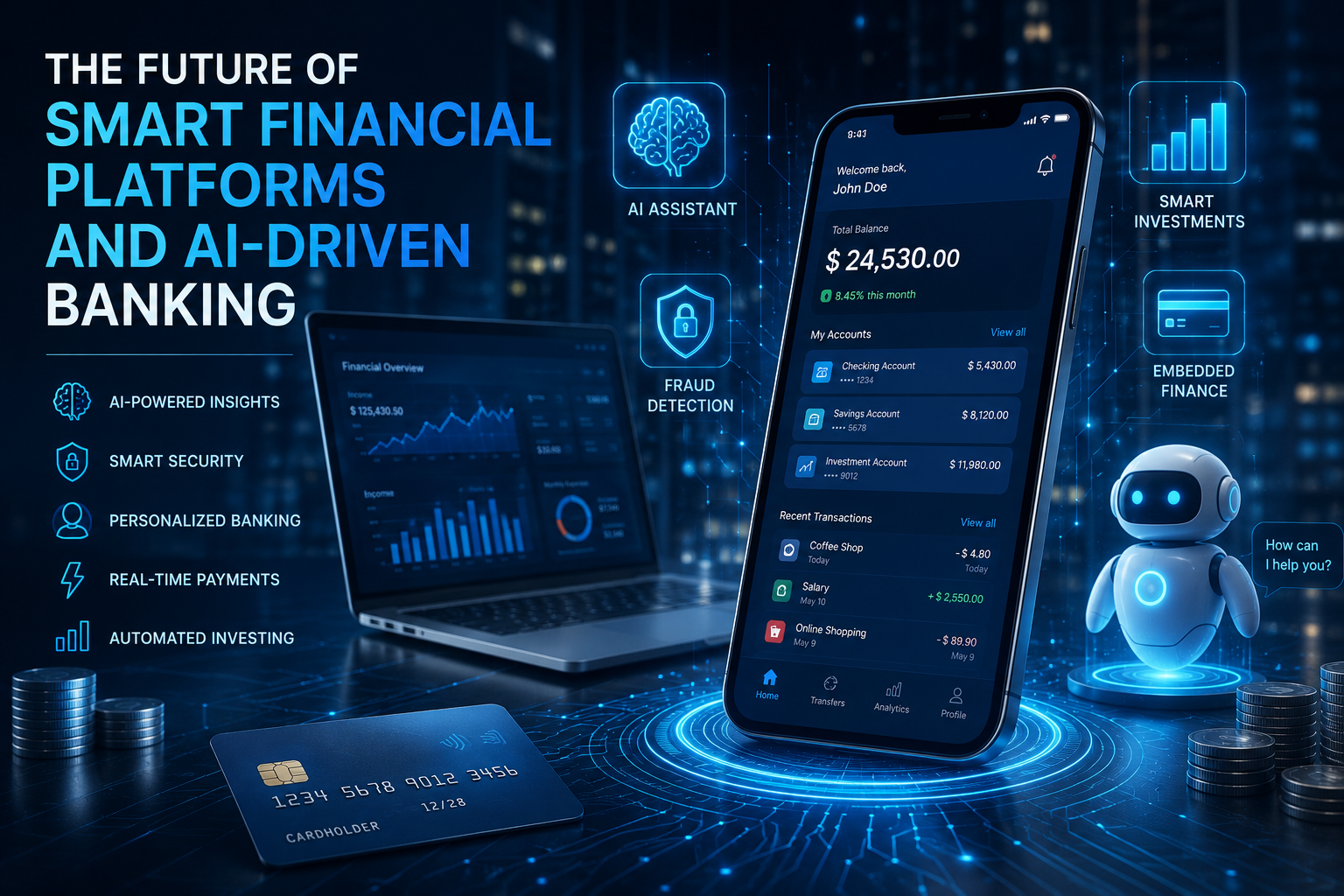
The financial industry is entering a new era driven by artificial intelligence, automation and advanced digital banking technology. Across global markets, banks, fintech companies and wealth management platforms are rapidly investing in AI-driven banking solutions designed to improve customer experience, operational efficiency and personalized financial services.
As digital finance continues evolving, smart financial platforms are becoming central to how consumers manage payments, investments, savings and long-term financial planning. Industry analysts believe artificial intelligence could fundamentally reshape modern banking infrastructure throughout 2026 and beyond.
From AI financial assistants and fraud detection systems to automated investment tools and predictive analytics, financial institutions are increasingly relying on intelligent technology to stay competitive in a rapidly changing fintech environment.
What Is AI-Driven Banking?
AI-driven banking refers to the use of artificial intelligence, machine learning and automation technologies inside digital financial services and banking platforms.
Modern AI banking systems can analyze enormous amounts of financial data in real time to improve decision-making, customer support, risk management and operational efficiency.
Today, AI-powered financial platforms are commonly used for:
- Automated customer support
- Fraud detection and prevention
- Personalized financial recommendations
- Investment management
- Credit risk analysis
- Real-time payment monitoring
- Predictive financial insights
As artificial intelligence becomes more advanced, financial institutions are integrating AI across nearly every area of digital banking operations.
Smart Financial Platforms Are Changing Consumer Expectations
Modern banking customers increasingly expect fast, personalized and highly accessible financial services across both desktop and mobile platforms.
Smart financial platforms are responding by offering:
- AI-powered financial insights
- Personalized budgeting tools
- Automated savings systems
- Real-time transaction alerts
- Advanced investment dashboards
- Digital wealth management services
This shift is helping banks and fintech companies create more customized user experiences while improving long-term customer engagement.
AI Financial Assistants Continue Expanding
AI financial assistants are becoming one of the fastest-growing areas within digital banking and fintech services.
These systems use machine learning and conversational AI to help users:
- Track spending habits
- Manage investments
- Monitor account activity
- Receive personalized financial advice
- Improve budgeting decisions
- Identify saving opportunities
Several major financial institutions are already testing advanced AI advisors capable of providing real-time financial guidance based on customer behavior and market conditions.
Key Trends Driving AI Banking Growth in 2026
| Trend | Impact on Financial Services |
|---|---|
| AI-powered personalization | More customized banking experiences |
| Automated financial advice | Faster customer support and guidance |
| Fraud detection AI | Improved transaction security |
| Embedded finance | Banking integrated into digital apps |
| Real-time payments | Faster financial transactions |
| Cloud-native banking | Improved scalability and efficiency |
Fraud Detection and Banking Security Are Becoming Smarter
One of the biggest advantages of AI-driven banking involves fraud detection and cybersecurity improvements.
Artificial intelligence systems can monitor millions of transactions in real time and identify suspicious behavior patterns far faster than traditional manual systems.
Modern banking AI tools can help:
- Detect unusual account activity
- Prevent payment fraud
- Reduce identity theft risks
- Improve anti-money laundering systems
- Strengthen cybersecurity monitoring
As cyber threats continue evolving, AI-powered banking security is expected to become even more important across global financial systems.
Embedded Finance Is Expanding Rapidly
Embedded finance continues emerging as one of the biggest fintech trends in 2026. This model allows financial services to be integrated directly into non-banking platforms and digital ecosystems.
Consumers can now access banking features inside:
- E-commerce platforms
- Mobile applications
- Subscription services
- Travel apps
- Business software ecosystems
This shift is changing how consumers interact with financial products and creating new growth opportunities for fintech companies.
Cloud-Native Banking Infrastructure Is Becoming Essential
Financial institutions are increasingly moving toward cloud-native banking systems to improve flexibility, scalability and operational efficiency.
Cloud-based financial platforms help organizations:
- Process transactions faster
- Scale digital services more efficiently
- Reduce infrastructure costs
- Improve system reliability
- Accelerate fintech innovation
Many industry experts believe cloud-native infrastructure will become a standard requirement for future AI-driven banking systems.
Digital Wealth Management Continues Growing
AI-powered wealth management platforms are also becoming increasingly popular among retail investors and financial advisory firms.
Modern WealthTech systems now offer:
- Automated portfolio analysis
- AI investment recommendations
- Risk management tools
- Predictive market insights
- Personalized financial planning
This technology allows financial platforms to provide more accessible investment management services to broader audiences.
Challenges Facing AI Banking Platforms
Despite rapid growth, AI-driven banking also creates several important challenges involving:
- Data privacy concerns
- Regulatory compliance
- Algorithm transparency
- Cybersecurity risks
- Consumer trust
- AI bias and decision-making oversight
Financial regulators worldwide are increasingly exploring how artificial intelligence should be governed inside banking and fintech environments.
The Future of Smart Financial Platforms
As AI technology continues improving, smart financial platforms are expected to become even more integrated into everyday financial activity.
Future banking systems may increasingly rely on:
- Predictive financial AI
- Fully automated digital advisors
- Advanced biometric security
- Hyper-personalized banking experiences
- Real-time financial forecasting
The combination of AI, automation and digital banking infrastructure could redefine how financial services operate over the next decade.
Conclusion
AI-driven banking and smart financial platforms are rapidly transforming the global financial industry. From automated financial advisors and fraud detection systems to personalized digital banking experiences, artificial intelligence is becoming central to the future of fintech innovation.
As financial institutions continue investing in cloud-native infrastructure, AI personalization and embedded finance, digital banking platforms are expected to become smarter, faster and more adaptive than ever before.
With fintech competition continuing to intensify throughout 2026, AI-powered financial technology will likely remain one of the most important trends shaping the future of modern banking.
