
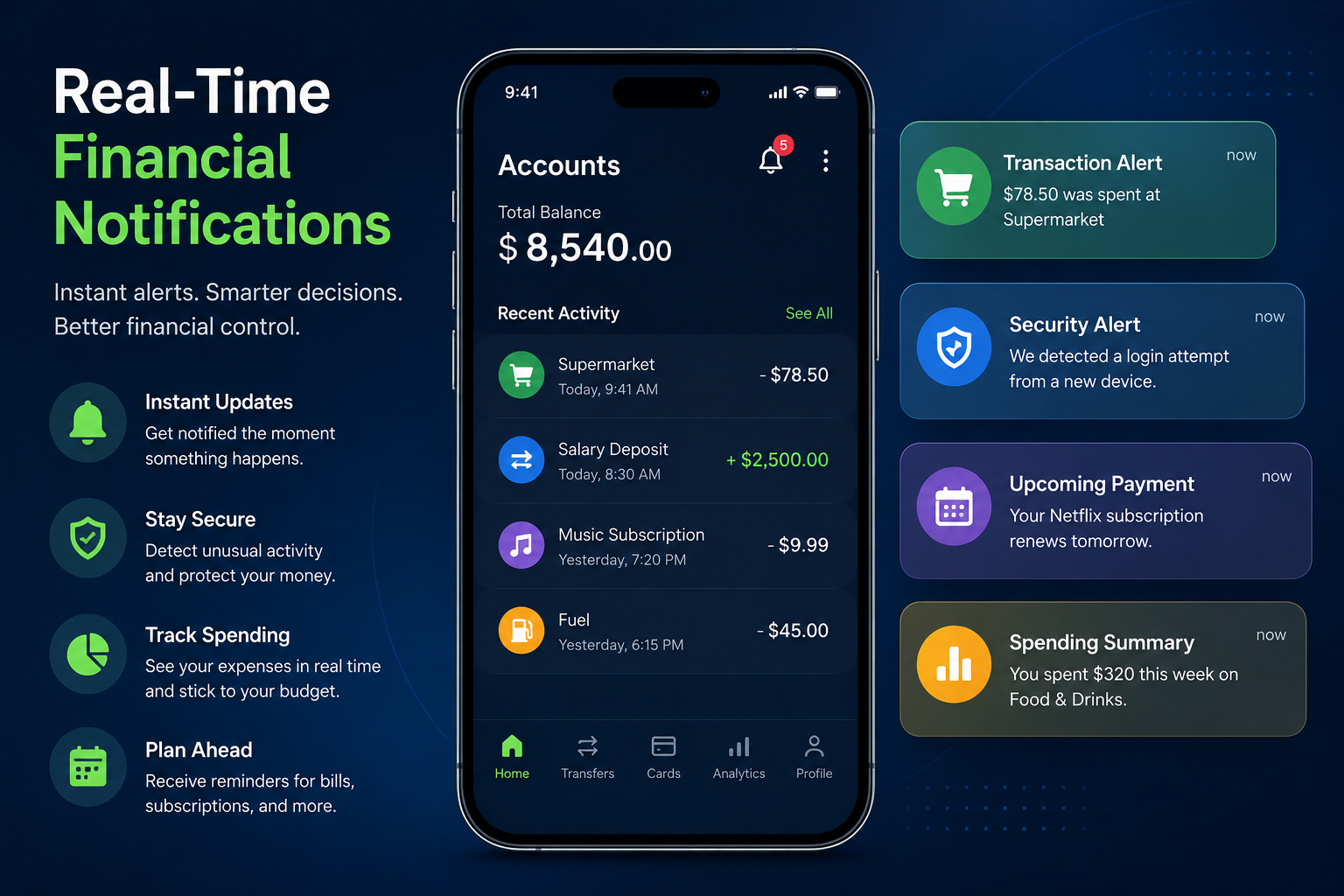
Banking apps used to be passive tools people opened only when they needed to check a balance or transfer money. That behavior has changed dramatically over the last few years. In 2026, real-time financial notifications have become one of the most important features inside modern banking platforms.
Instead of waiting for monthly statements or manually checking transactions, users now expect instant updates for purchases, transfers, subscriptions, salary deposits, and unusual activity. These alerts are quietly reshaping how people interact with money every day.
Users Now Monitor Spending In Real Time
One of the biggest shifts in digital banking is how quickly users react to transactions. A payment notification arriving seconds after a card purchase creates a stronger awareness of spending behavior than traditional account summaries ever did.
Many users now track their finances through notifications rather than by opening the banking app itself. This constant feedback loop helps people notice recurring expenses, unexpected charges, and impulse purchases almost immediately.
| Traditional Banking Habits | Modern Banking App Behavior |
|---|---|
| Checking balances weekly | Receiving instant spending alerts |
| Reviewing monthly statements | Tracking purchases in real time |
| Late fraud detection | Immediate suspicious activity alerts |
| Manual budgeting | Automated spending notifications |
Push Notifications Reduced Financial Anxiety
Modern banking users often feel more comfortable when they know exactly what is happening with their accounts at all times. Real-time alerts reduce uncertainty and help users feel more in control of their finances.
Fraud warnings, failed payment notifications, low balance reminders, and transfer confirmations create a sense of transparency that older banking systems struggled to provide.
This is especially important for younger mobile-first users who expect instant communication from every digital service they use.
Subscription Tracking Became Easier
Subscription-based services continue growing across entertainment, gaming, software, and shopping platforms. Because of this, banking notifications are becoming a useful budgeting tool.
Many financial apps now warn users before recurring payments are processed. Others highlight rising subscription costs or detect services that users rarely use.
This small feature has changed how people manage streaming services, memberships, and online platforms throughout the year.
Banking Apps Are Becoming More Personalized
Financial notifications are no longer limited to basic transaction alerts. Many fintech companies now use behavioral analysis to send more relevant updates based on spending patterns.
Examples include:
- Alerts about unusual spending activity
- Travel-related payment reminders
- Notifications about approaching bill due dates
- Warnings about repeated overdraft risks
- Weekly summaries showing category-based expenses
This level of personalization helps users make faster financial decisions without manually reviewing account activity.
Speed Is Becoming More Important Than Interface Design
While banking app design still matters, many users now prioritize responsiveness and instant communication over visual complexity.
Fast alerts, live transaction updates, and reliable payment confirmations often have a bigger impact on user trust than animations or advanced interface elements.
This trend is pushing many fintech companies toward simpler, faster, and more functional mobile experiences.
Financial Notifications Will Continue Expanding
Real-time banking communication is still evolving. Financial platforms are already experimenting with smarter predictive notifications that can warn users before financial problems happen.
Future banking alerts may become even more proactive, helping users prepare for upcoming expenses, unusual spending spikes, or changing financial habits before they create larger issues.
As mobile banking continues dominating the financial industry, real-time financial notifications are becoming less of an extra feature and more of a standard expectation for modern users.
