
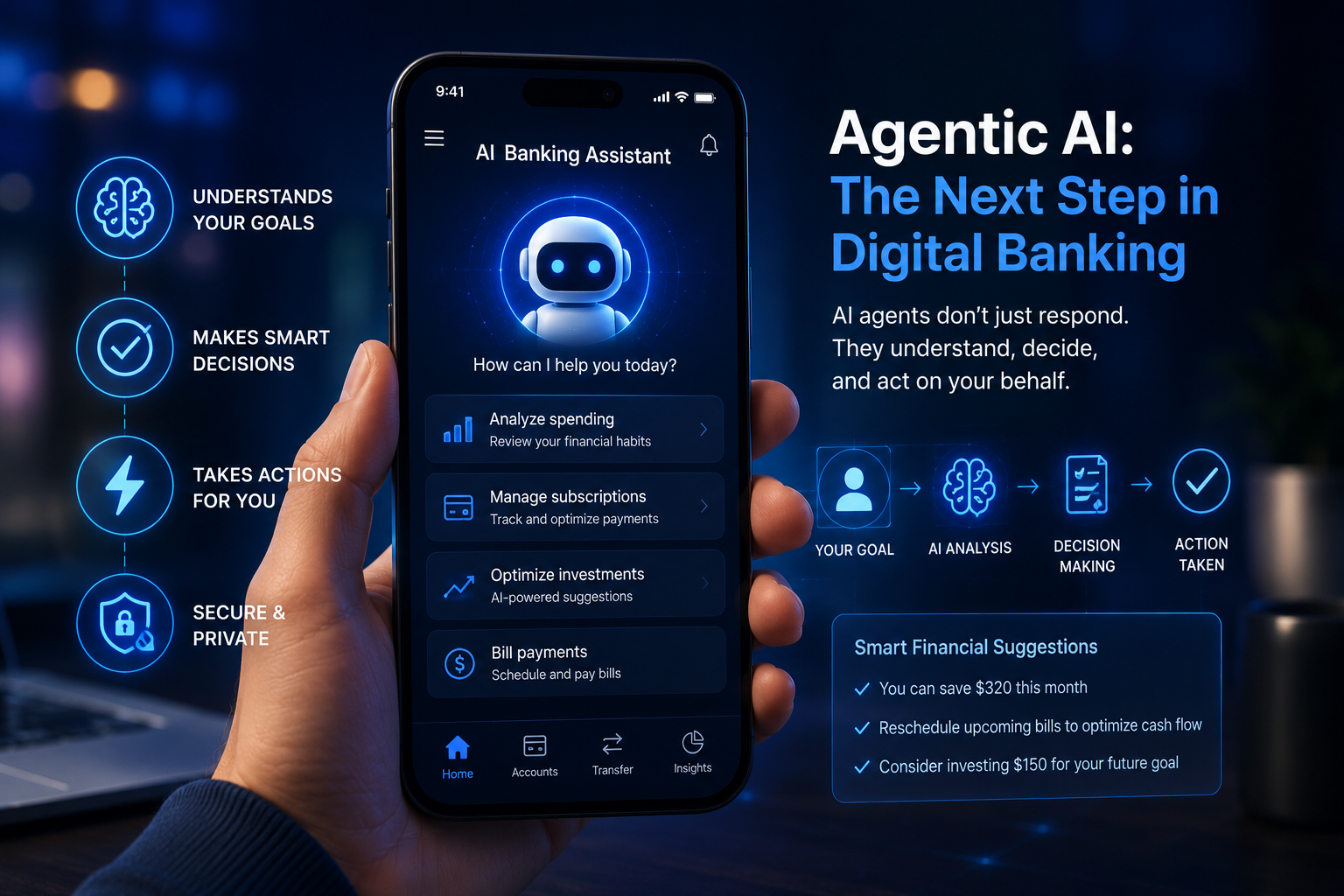
Modern banking is entering a new phase of artificial intelligence. While previous AI systems focused on answering questions and automating repetitive tasks, a new generation of technology known as agentic AI is beginning to reshape how financial services operate.
Agentic AI refers to systems capable of taking actions on behalf of users rather than simply providing information. Instead of reminding a customer about a bill, an AI agent may eventually recommend the best payment strategy, move funds between accounts, or help optimize spending automatically.
Banking Is Moving Beyond Automation
For years, digital banking innovation focused on mobile apps, chatbots, and automated customer support. These technologies improved convenience but still required customers to make most financial decisions themselves.
Agentic AI introduces a different approach. Financial institutions are now exploring systems capable of understanding user goals and helping execute financial tasks more proactively.
Examples include:
- Monitoring spending behavior
- Detecting unusual transactions
- Suggesting savings opportunities
- Helping manage subscriptions
- Supporting investment decisions
- Improving cash flow planning
The objective is not to replace customers but to provide smarter financial assistance.
Major Financial Institutions Are Investing
Several global banks and fintech companies have recently announced expanded AI initiatives focused on next-generation financial assistants.
Rather than operating as simple chat interfaces, these systems are designed to analyze financial data, identify patterns, and provide contextual recommendations based on individual circumstances.
As AI models become more capable, financial organizations see agentic systems as a potential way to deliver highly personalized banking experiences at scale.
Better Financial Decisions Through Context
One advantage of agentic AI is its ability to process multiple data points simultaneously.
Traditional banking tools typically show balances, transactions, and spending reports. Agentic systems can potentially combine this information with broader financial behavior to generate useful insights.
For example:
| Traditional Banking Tools | Agentic AI Systems |
|---|---|
| Transaction history | Context-aware analysis |
| Static reports | Personalized recommendations |
| Manual budgeting | Dynamic spending insights |
| Basic alerts | Proactive financial guidance |
This evolution could help consumers make faster and more informed decisions.
Security Remains a Priority
As financial institutions adopt more advanced AI systems, security and transparency remain critical concerns.
Banks continue investing heavily in fraud detection, identity verification, and regulatory compliance. Agentic AI systems must operate within strict safeguards while ensuring customers maintain control over financial decisions.
Trust will remain one of the most important factors influencing adoption.
The Future of Digital Banking
The banking industry has already experienced significant transformation through mobile technology and cloud infrastructure. Agentic AI may represent the next major shift.
Rather than functioning only as digital tools, future banking applications may increasingly operate as intelligent financial assistants capable of helping users manage money more effectively.
As AI technology continues advancing throughout 2026, agentic systems are expected to become an increasingly important part of the digital banking experience.
