
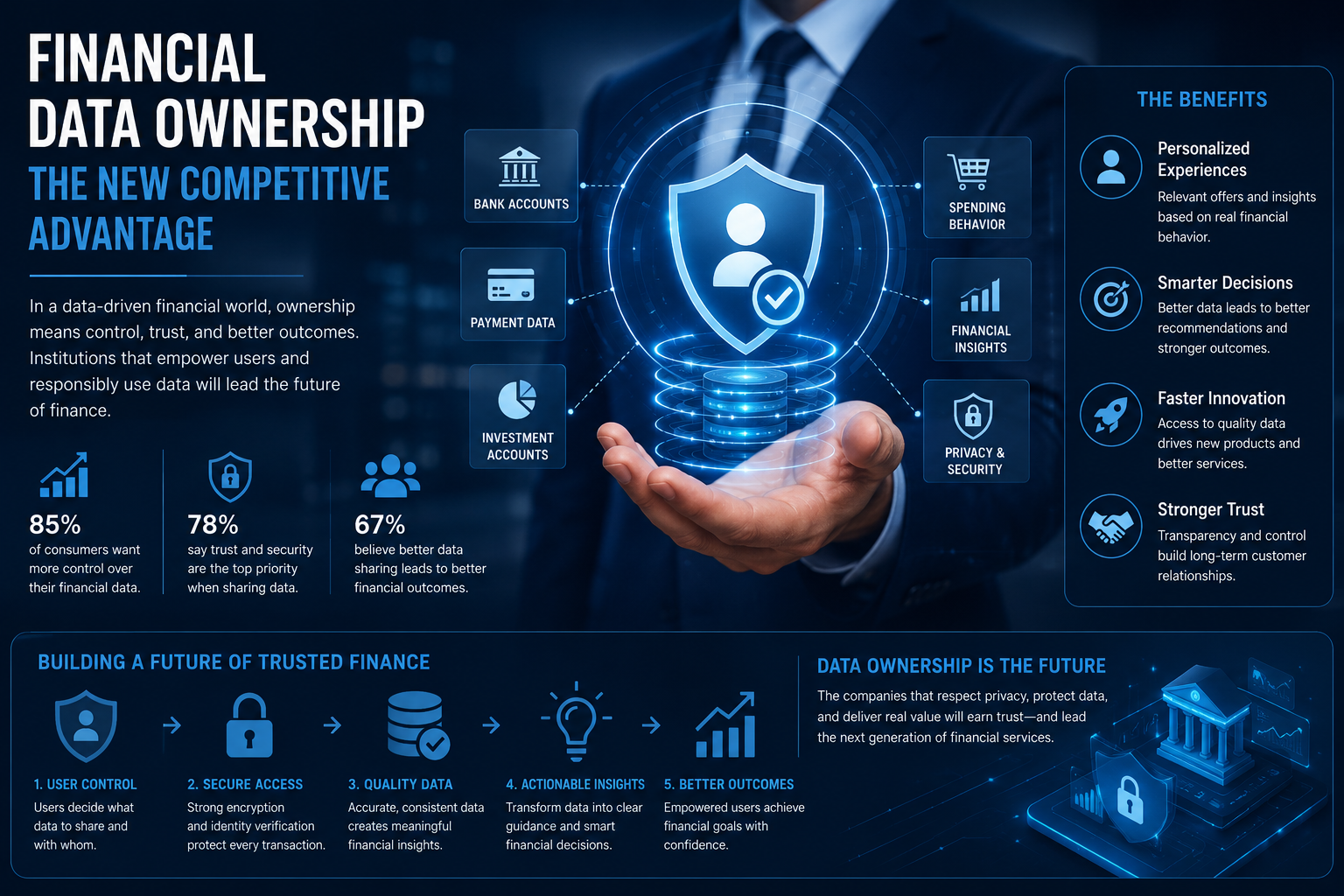
The financial industry has spent the past decade focused on digital transformation, artificial intelligence, and open banking. While these innovations continue to reshape the market, a new strategic priority is emerging across fintech and financial services: financial data ownership.
In 2026, institutions are beginning to recognize that access to accurate, permission-based customer data may become one of the most valuable competitive advantages in the industry. As consumers use more financial apps, investment platforms, payment services, and digital wallets, the organizations that can responsibly manage and activate customer data are gaining a significant edge.
The Shift Toward User-Controlled Financial Data
Historically, customer financial information remained fragmented across banks, credit providers, investment accounts, and payment networks. This often limited visibility and created friction for both consumers and service providers. Today, modern financial ecosystems are moving toward models where users have greater control over how their data is shared and utilized.
Consumers increasingly expect to:
- View all financial accounts in one place
- Control data-sharing permissions
- Transfer information between providers
- Receive personalized financial services
- Understand how their data is being used
As a result, financial data ownership is becoming a central part of the customer experience.
Why Data Matters More Than Ever
Financial institutions are collecting more information than at any point in history. This includes:
| Data Category | Examples |
|---|---|
| Spending Data | Purchases, subscriptions, recurring payments |
| Investment Data | Portfolio activity, risk preferences |
| Banking Data | Deposits, withdrawals, transfers |
| Behavioral Data | App usage, financial habits |
| Payment Data | Card activity, digital wallet transactions |
The ability to analyze these datasets allows companies to create more relevant products and services.
Better Personalization Starts With Better Data
Personalization has become a major differentiator in financial technology. When institutions have access to comprehensive financial information, they can provide:
- Smarter budgeting recommendations
- Personalized investment insights
- More relevant lending offers
- Customized savings strategies
- Improved financial planning tools
Consumers increasingly value platforms that understand their financial goals and provide guidance that reflects their unique circumstances.
Open Finance Is Accelerating the Trend
The expansion of open finance frameworks is helping accelerate the importance of data ownership. Unlike traditional banking models, open finance allows consumers to securely share information across a wider range of financial products.
This creates opportunities for:
- Fintech innovation
- Cross-platform integration
- Enhanced customer experiences
- Faster product development
- More accurate financial insights
Companies that successfully navigate this environment are positioning themselves for long-term growth.
Trust Remains Essential
As financial data becomes more valuable, trust becomes even more important. Consumers are becoming increasingly selective about which organizations they allow to access their information.
Key factors influencing trust include:
- Transparency
- Security standards
- Privacy controls
- Regulatory compliance
- Clear communication
Institutions that fail to establish trust may struggle to gain permission to access the data necessary for advanced financial services.
Why Investors Are Paying Attention
Investors increasingly view proprietary customer data as a strategic asset. Financial platforms that maintain strong user relationships and collect high-quality permission-based data can create more sustainable competitive advantages than businesses relying solely on traditional product offerings. This trend is influencing investment decisions throughout the fintech sector.
The Future of Financial Competition
Competition in financial services is gradually shifting away from simply offering lower fees or additional features. Increasingly, success depends on understanding customers better than competitors and using financial data responsibly to deliver meaningful value. Organizations that empower users, protect privacy, and transform data into actionable insights are likely to become leaders in the next phase of financial innovation.
Final Thoughts
Financial data ownership is evolving into one of the most important strategic assets in modern finance. As open finance expands and digital ecosystems become more connected, institutions that can responsibly manage customer data will be better positioned to build trust, improve personalization, and deliver superior financial experiences. In 2026 and beyond, the companies that understand the value of financial data ownership may gain an advantage that extends far beyond technology itself.
