
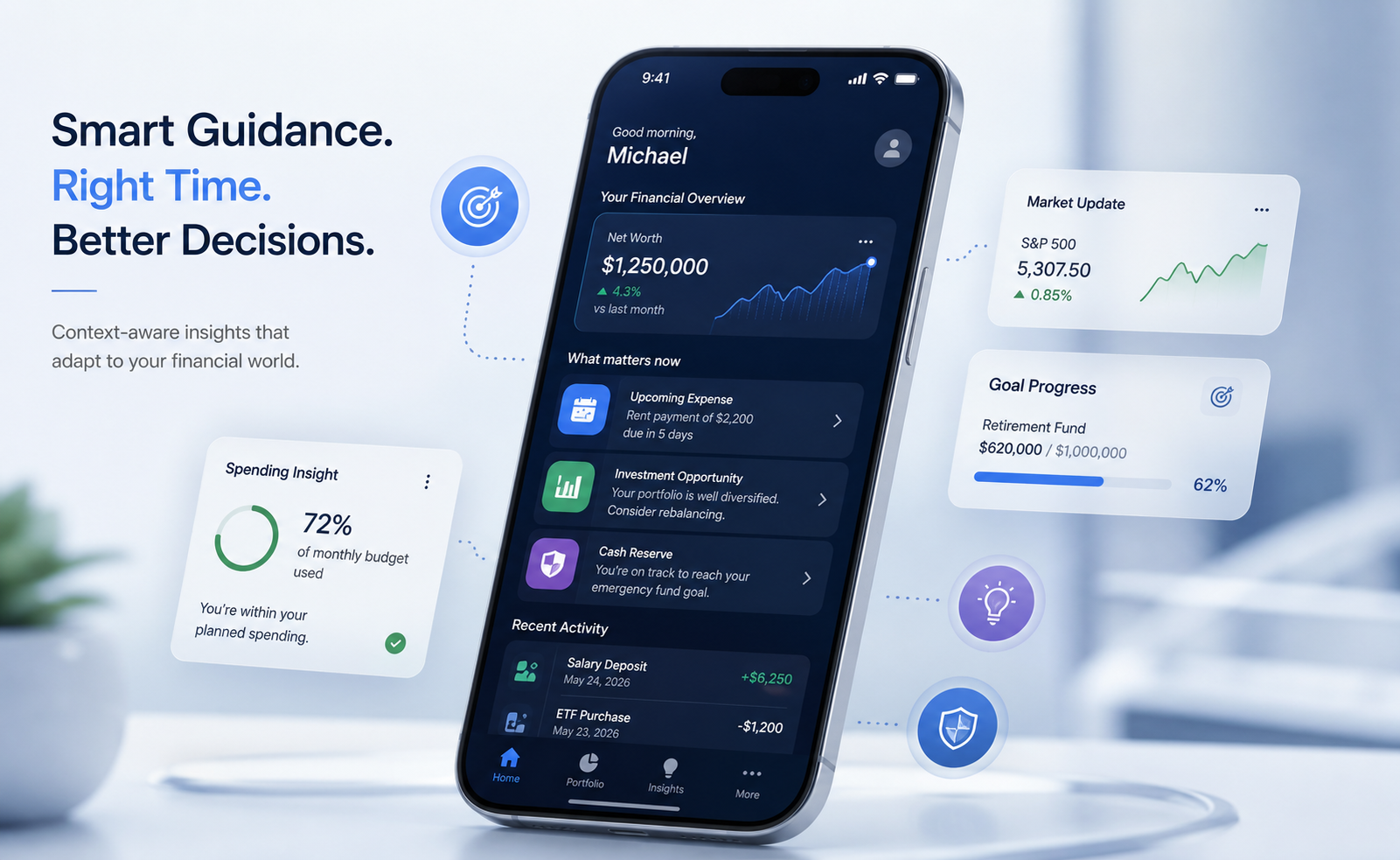
Financial technology has evolved far beyond simply displaying account balances or investment performance. Modern wealth platforms are entering a new phase where guidance is delivered at the exact moment users need it. Rather than relying on static dashboards or generic recommendations, digital financial services are beginning to understand personal context, helping people make more informed decisions based on their current financial situation.
This shift toward context-aware financial guidance is redefining what users expect from wealth management platforms. Instead of searching for answers manually, investors increasingly receive relevant insights precisely when they matter most.
Financial Advice That Understands the Situation
Traditional financial dashboards provide the same charts regardless of changing circumstances. Context-aware platforms work differently. They evaluate factors such as current market conditions, portfolio allocation, cash availability, upcoming expenses, and recent account activity before determining which information deserves immediate attention. As a result, the interface becomes significantly more useful because it responds to changing financial conditions instead of displaying identical information every day.
Smarter Portfolio Monitoring
Investment tracking is becoming increasingly proactive. Rather than requiring investors to analyze every movement themselves, modern wealth platforms can highlight significant portfolio changes automatically. If an asset becomes overweight, diversification declines, or market volatility increases, users receive contextual explanations alongside the relevant data. This allows investors to understand not only what changed but also why it may deserve attention.
Personalized Guidance Without Information Overload
One of the biggest challenges in personal finance is balancing useful information with unnecessary complexity. Context-aware systems solve this problem by prioritizing only the insights that match a user’s current financial goals and activity. Someone preparing to purchase a home may receive mortgage-related planning suggestions, while long-term investors are shown retirement-focused analytics. Users managing short-term liquidity may instead see cash-flow recommendations or spending forecasts. Relevant information replaces excessive information.
Timing Is Becoming More Important Than Quantity
Financial guidance has traditionally focused on providing as much information as possible. Modern platforms recognize that timing often matters more.
Examples include:
- Investment reminders before scheduled contributions
- Tax planning alerts before reporting deadlines
- Cash reserve notifications during increased spending
- Portfolio reviews after major market events
- Savings recommendations following salary deposits
Receiving the right suggestion at the right moment improves decision-making far more than constant notifications.
Adaptive Dashboards Create Better Experiences
Digital wealth platforms are gradually replacing fixed dashboards with adaptive interfaces. Instead of permanently displaying identical widgets, dashboards now adjust according to recent activity and financial priorities. Frequently used tools become easier to access, while less relevant information moves into the background until it becomes important again. This creates cleaner interfaces without sacrificing functionality.
Helping Investors Stay Focused
Financial markets generate enormous amounts of information every day. Following every headline rarely leads to better investment decisions. Context-aware guidance filters unnecessary noise by emphasizing events that actually affect a user’s portfolio or financial objectives. Rather than reacting emotionally to every market movement, investors receive insights that are directly connected to their own financial position.
Artificial Intelligence Supports Better Context
Artificial intelligence is making contextual financial guidance increasingly sophisticated. Modern systems can recognize long-term behavior patterns, identify recurring financial habits, and detect meaningful changes without requiring manual input from users.
Importantly, AI is becoming less focused on making decisions for investors and more focused on helping them understand available options through clearer explanations and personalized insights.
Transparency Builds Greater Trust
As financial platforms become more intelligent, transparency becomes equally important. Users increasingly want to understand why recommendations appear, what information was considered, and how personalized guidance is generated. Platforms that clearly explain their reasoning are more likely to earn long-term trust than those relying on unexplained automated suggestions.
Looking Ahead
The future of digital wealth management will not be defined by larger dashboards or more investment charts. Instead, competitive advantage will come from delivering meaningful financial guidance that adapts to each user’s unique situation.
Context-aware financial guidance represents the next stage of digital wealth platforms, combining real-time data, behavioral understanding, and intelligent timing to create experiences that feel genuinely helpful. As financial technology continues evolving, successful platforms will increasingly act less like reporting tools and more like trusted financial companions that know when guidance is needed—and when it is not.
