
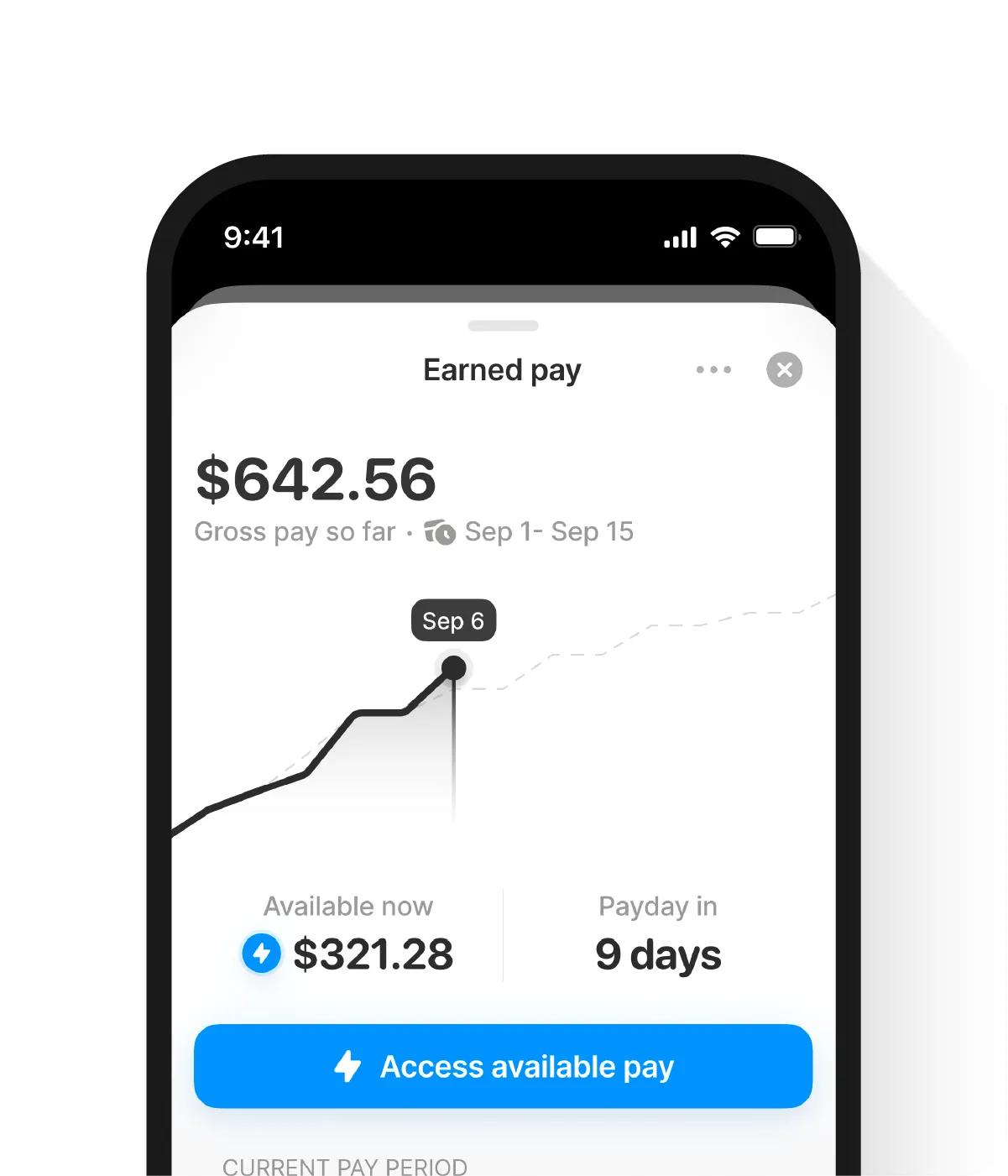
Payday has traditionally been treated as a fixed point in personal finance. An employee works throughout the month, wages accumulate and the money reaches a bank account on a predetermined date. Expenses, however, do not follow the same schedule. A car repair can appear on Tuesday, a utility bill may be due on Thursday and the next salary payment might still be more than a week away.
Early wage access is beginning to challenge that timing mismatch. Instead of waiting for the normal payroll date, eligible workers can access part of the money they have already earned. What began largely as an employer-linked benefit is increasingly relevant to fintech platforms and banking apps that want to provide more flexible tools around income and short-term cash flow. The idea sounds straightforward, but its usefulness depends heavily on how the feature is designed, priced and explained.
Early wage access changes when money becomes available
The basic concept is easier to understand if we separate earning money from receiving it. An employee might earn wages every working day even though payroll transfers the total only once or twice per month. Early wage access attempts to make some of those accrued earnings available before the scheduled payday.
A simplified example could look like this:
| Stage | Traditional payroll | Early wage access |
|---|---|---|
| Work completed | Wages accrue | Wages accrue |
| Before payday | Usually unavailable | Eligible portion may be accessible |
| Accessed amount | None | Transferred early |
| Payday | Full normal payment | Remaining eligible pay arrives |
| Following month | New cycle begins | New cycle begins |
The exact mechanics vary between providers. Some systems integrate directly with employers and payroll data, while others estimate eligibility using account and income information. That difference matters because products that look similar in an app can operate very differently behind the interface.
It is not simply a faster salary notification
Modern banking apps have become much better at identifying regular income. They can recognize that a recurring payment probably comes from an employer, separate salary from ordinary transfers and use that information in budgeting or forecasting tools.
Early wage access goes a step further. Instead of simply recognizing income after it reaches the account, the service needs enough information to determine whether some amount can be made available beforehand.
That may involve payroll integration, employer data, work records or another method of confirming eligible earnings. The feature therefore sits at an interesting point between banking, payroll technology and personal financial management.
The timing problem is often more important than the monthly total
A person can earn enough over an entire month and still experience a temporary cash shortage. Suppose income arrives on the final working day of each month while rent, insurance and several recurring bills are concentrated earlier. A one-off expense can create several difficult days even though the monthly budget remains positive overall. Traditional budgeting tools show the problem. Early wage access attempts to change the timing.
This distinction is important because short-term liquidity and long-term affordability are not the same thing. Someone who regularly spends more than they earn has a structural budget problem. Moving payday forward by several days does not solve it. Someone who has enough income but encounters an unusual timing gap faces a different situation. Banking apps need to avoid presenting one tool as the answer to both.
Users need to know how much has actually been earned
One of the most important interface challenges is explaining the available amount. Showing a large button labeled Get Paid Early without context leaves too many questions unanswered. Is the amount an estimate? Has it already been earned? Will it reduce the next salary payment? Is there a fee?
A clearer screen could separate several figures:
Earned so far: the amount attributed to completed work.
Available early: the portion currently eligible for access.
Already accessed: money transferred earlier in the pay cycle.
Expected on payday: the remaining amount based on current information. The user can then see the relationship between today’s transfer and the next payroll payment instead of treating them as unrelated amounts.
The next payday should remain visible
Early access can feel deceptively simple at the moment money arrives. The consequence appears later. If a worker receives part of their wages before payday, the amount available at the regular payment date may be lower depending on how the service operates. Hiding that future effect makes the feature harder to manage.
Banking apps are particularly well positioned to show both sides of the transaction on one screen. A user requesting early access could see the amount arriving today alongside an estimate of what remains for payday. That turns a short-term decision into something easier to evaluate within the rest of the month’s finances.
Fees need to be visible before confirmation
Early wage access services can use different pricing models. Depending on the provider, there may be employer-funded access, subscription charges, fixed transfer fees or optional faster-transfer costs. Whatever the model, the important UX principle is straightforward: users should see the cost before confirming.
A useful confirmation screen could show:
| Information | Example purpose |
|---|---|
| Amount requested | Shows what the user wants to access |
| Transfer fee | Makes direct cost visible |
| Amount received | Shows what reaches the account |
| Expected arrival | Distinguishes instant and standard transfer |
| Remaining accessible wages | Shows what is left |
| Expected payday amount | Connects today’s choice with later cash flow |
A user should not need to open several help pages to understand the economics of a small transaction.
Fast transfer and free transfer should not look identical
Some financial products distinguish between a standard transfer that may take longer and a faster option that costs more. That creates another interface decision. If the paid option is visually dominant while a lower-cost alternative is difficult to notice, users may choose speed without realizing they had another choice.
Both options should clearly state timing and cost. For example, an app might display Standard — no transfer fee — expected tomorrow beside Instant — fee applies — expected within minutes. The user can then decide whether the urgency justifies the difference. The point is not that one option is universally better. The point is that speed has a visible price when a price exists.
Small withdrawals can make fees look deceptively minor
A fixed fee can appear insignificant when shown as an absolute amount. Its impact can look very different relative to the amount being accessed. A hypothetical $2 fee on a $200 transfer is different from the same $2 fee on a $20 transfer. The number on the confirmation button remains $2, but the proportion changes considerably.
This is one reason clear transaction summaries matter. Users should be able to understand the total amount received rather than focusing only on the size of the fee itself. For frequent users, an app could also summarize how much has been paid in access-related fees over a month or year. That information may be more useful than viewing each transaction separately.
Repeated use can change the shape of a pay cycle
Using early wage access once for an unexpected expense is easy to understand. Repeated use creates a more complicated pattern. If someone regularly accesses wages several days early, the normal payday may become smaller. That can encourage another early withdrawal during the next cycle, gradually shifting the person’s effective payday forward. The feature can therefore influence financial habits even when each individual transaction appears manageable.
A banking app can make this pattern visible. Instead of displaying only the latest transfer, it could show how frequently early access has been used over recent pay periods. That allows the user to distinguish an occasional convenience from a recurring dependency.
Frequency may matter as much as the amount
Personal finance interfaces often emphasize totals: how much was spent, saved, borrowed or transferred. With early wage access, frequency provides another useful signal. A person accessing $150 once during an unusual month has a different pattern from someone requesting $30 every few days. Both might withdraw the same total amount, but the behavior suggests different cash-flow conditions.
A simple monthly history could therefore include:
- number of early-access transfers;
- total wages accessed before payday;
- total fees paid;
- average number of days before payday;
- remaining salary received on the normal date.
These figures give the user a clearer view of how the feature fits into everyday finances.
Banking apps can connect early access with cash-flow forecasting
This is where integration becomes more interesting. A standalone wage-access service may know how much income is available but have limited visibility into the user’s upcoming financial commitments. A banking app already has access to the account’s transaction history and may recognize recurring bills. That creates an opportunity to provide context.
Before requesting an early transfer, the user could see that rent, a utility payment and an insurance charge are expected before the next salary date. The app does not need to tell the user what decision to make. Simply showing the upcoming cash-flow picture can make the consequences easier to evaluate. Early access then becomes part of financial planning rather than an isolated button.
Upcoming bills can explain why the available balance is misleading
A current account balance answers only one question: how much money is there now? It does not show what has already been committed. A user might access $300 early and see the account balance rise immediately. If $250 of recurring payments are expected over the next few days, however, the apparently comfortable balance can disappear quickly. Banking apps increasingly have the data needed to provide that context.
A cash-flow view could combine:
Current balance + early wage transfer − expected bills = projected available balance.
The calculation does not need to be perfect to be useful. It simply needs to distinguish money currently visible from money likely to remain after known commitments.
Notifications should focus on information, not pressure
Early wage access creates obvious opportunities for push notifications. That does not mean every opportunity should become a prompt. Messages such as “You have $400 available right now” can turn an optional financial tool into something that feels like a spending invitation. A more neutral approach might notify users when eligibility changes only if they have chosen to receive those alerts.
Informational notifications are more useful around completed actions:
- transfer requested;
- transfer completed;
- available amount updated;
- payday approaching;
- expected remaining salary changed.
The difference is subtle but important. Notifications can help users track money without constantly encouraging them to access it earlier.
Income changes create a difficult edge case
Regular salaries are not always perfectly regular. Hours can change. Bonuses appear. Overtime varies. A worker can take unpaid leave or change employers. Payroll corrections can also alter the final amount. If an early-access system relies on estimated income, those changes need careful handling.
The interface should avoid presenting estimates as guaranteed future salary. Where appropriate, labels such as estimated, currently available or based on reported earnings can make uncertainty clearer. This becomes particularly important when the amount visible in the banking app depends on information supplied by another system.
Employer-linked and bank-led models can feel different
Not every early wage access feature has the same data source. An employer-linked system may receive information about completed shifts or accrued earnings directly from payroll infrastructure. A banking or fintech product might instead rely on recurring income patterns or another eligibility model. From the user’s perspective, both may appear as a button offering access before payday. The underlying distinction should not be hidden when it materially affects how the product works.
| Model | Possible data source | Key user question |
|---|---|---|
| Employer-linked | Payroll or work records | How much have I already earned? |
| Banking-based | Account and income data | How is eligibility calculated? |
| Third-party service | Employer plus external platform | Who provides the service? |
| Salary advance product | Separate credit arrangement | Is this earned pay or borrowing? |
Clear terminology becomes essential because visually similar products can have very different financial structures.
Early wage access and credit should not be blurred together
This is probably the most important distinction for users. Some products provide access to wages already earned. Others advance money based on expected future income or operate more like short-term credit. Those concepts should not be casually combined under the same label.
A banking interface should explain what the user is receiving, how repayment or payroll adjustment works and whether the product involves credit. If the service is a loan, it should be presented as a loan. If it is access to accrued wages, the interface should explain how those accrued wages are determined. Clear classification matters more than marketing terminology.
A transaction timeline can make the process easier to follow
Early wage access creates several related events that may occur on different days. A timeline can connect them.
For example:
September 8 — $120 accessed early
September 8 — transfer completed
September 25 — regular payday
September 25 — remaining salary received
This format makes the relationship between the early transfer and later payroll payment visible without forcing the user to search through a general transaction list. It also helps explain why the final salary deposit may differ from the amount the user normally expects.
Budget categories should avoid counting income twice
Integration with personal finance tools introduces another technical challenge. If an app records the early transfer as new income and later records the original full salary without adjustment, monthly income statistics could become misleading. The system needs to understand that both transactions relate to the same pay cycle.
Otherwise, dashboards may overstate earnings, savings rates or available cash. This is exactly the kind of background financial-data problem that users rarely notice until a monthly summary looks obviously wrong. Good categorization should preserve the economic relationship between the transactions.
Shared financial accounts make the feature more complicated
In households where partners share expenses, an early wage transfer can affect more than one person’s planning. One partner may see the household balance rise without knowing that part of the next salary has effectively arrived early.
Shared financial spaces could therefore benefit from clear transaction labeling. The goal is not to expose employment information unnecessarily. It is to make sure money entering a shared budget is not mistaken for additional income when it represents a timing shift. Permissions and privacy controls become important when banking apps combine individual earnings with shared household planning.
Users should be able to turn the feature off
Not every eligible user wants early wage access. Some people prefer a fixed payday precisely because it creates a predictable monthly rhythm. Others may find early access too tempting or simply unnecessary.
An app can respect that preference by allowing the feature to remain unobtrusive or be disabled where the service model permits. This is particularly relevant if eligibility prompts appear frequently. Financial tools are more useful when they remain tools rather than becoming persistent calls to action.
Employers also have reasons to care about the experience
When early wage access is employer-linked, the banking interface is only one part of a larger system. Payroll teams need accurate records, employees need understandable balances and providers need reliable synchronization between earned wages and transfers.
Poor integration can create confusing situations where an employee sees one amount in the wage-access service and another in payroll information. That makes data consistency important. A polished mobile interface cannot compensate for unreliable information underneath it.
The best design makes the future visible
The immediate benefit of early wage access is obvious: money becomes available sooner. The future consequence is easier to overlook. That is why the strongest banking implementations will probably focus less on making the transfer button prominent and more on explaining the full pay cycle around it. Before confirming, users should be able to understand what they receive today, what it costs, what remains available and what they can expect on the normal payday.
Afterward, the transaction should remain connected to the salary it came from. When that information is visible, early wage access becomes easier to evaluate as a cash-flow tool rather than simply a faster way to move money.
Flexible payday features need more transparency, not less
Banking has spent years making money move faster. Early wage access applies the same expectation to income itself, allowing eligible users to reduce the gap between earning wages and receiving them. Speed alone, however, is not enough to make the feature useful.
People need to know whether the money represents accrued earnings or another type of advance, what fees apply, how the next payday changes and whether repeated use is becoming part of their normal monthly routine. Banking apps have an advantage here because they can place early access alongside balances, recurring bills, transaction history and cash-flow forecasts.
Used well, that context can make a potentially confusing product much easier to understand. The most useful version of early wage access may therefore be the one that feels least like an emergency button. It simply becomes another clearly explained part of the pay cycle, showing users not only what they can access today but also what that decision means for the money arriving tomorrow.
