
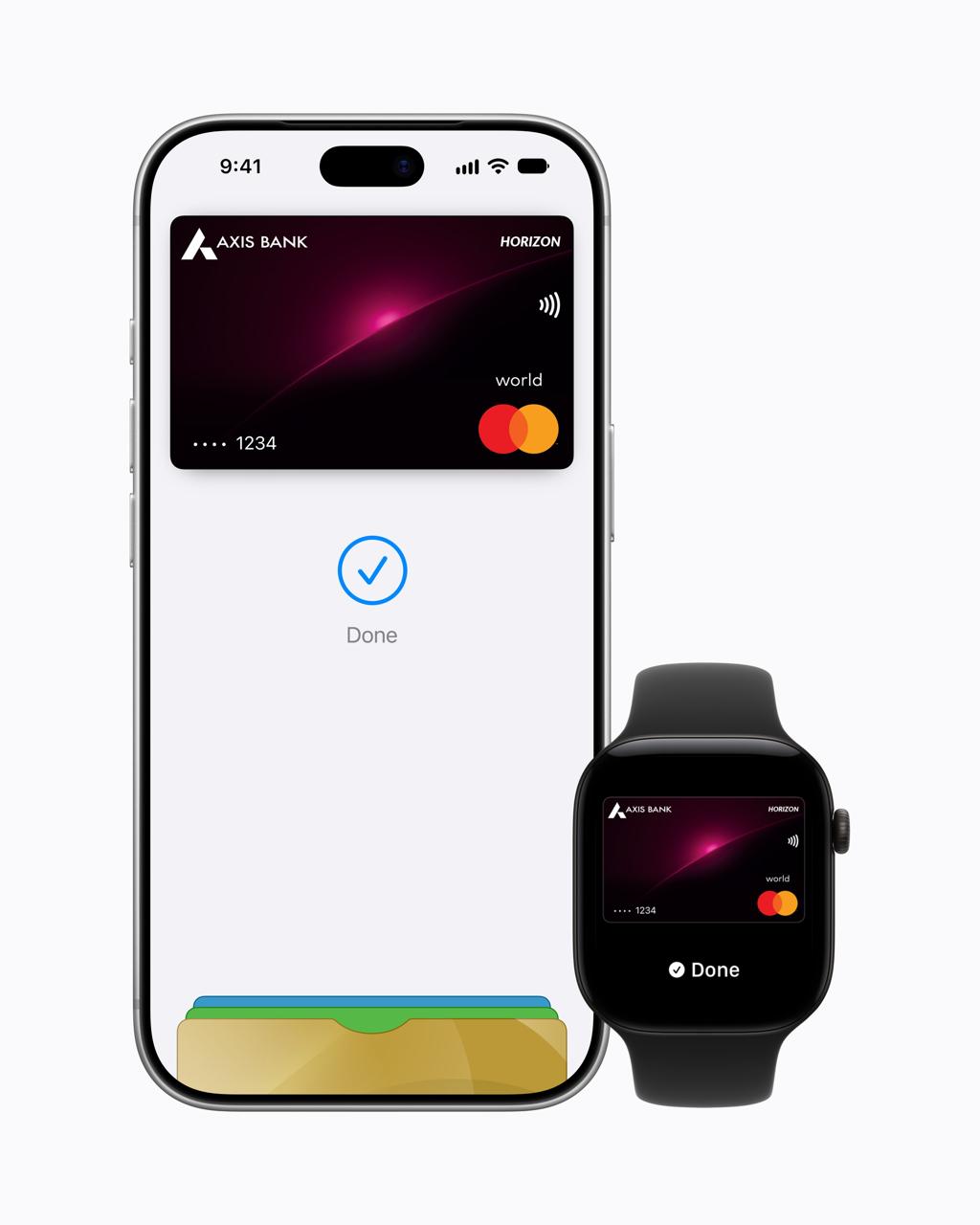
Apple Pay has finally arrived in India, bringing one of the world’s best-known digital wallets into one of its largest remaining unsupported markets. The launch on September 30, 2026 gives eligible Axis Bank credit card customers the ability to pay with an iPhone, Apple Watch or iPad in stores, apps and online, with Mac support expected to follow. On the surface, it resembles the familiar Apple Pay rollout seen across dozens of countries: add a bank card to Apple Wallet, authenticate the transaction on the device and pay without presenting the physical card.
India makes that familiar model much more interesting. Apple is not entering a market that has been waiting for a convenient way to pay digitally. It is entering an ecosystem where mobile payments are already deeply embedded in everyday life and where the Unified Payments Interface, or UPI, has made direct bank-to-bank transfers extraordinarily common. Apple Pay therefore has to establish a role alongside an existing payment habit rather than simply replacing cash or plastic cards with a phone. That distinction could make India an important test of what a global wallet becomes when the dominant local payment infrastructure follows a different model.
Apple Pay Has Started With a Deliberately Narrow Rollout
At launch, Apple Pay support in India is limited to eligible Axis Bank credit cards running on the Visa and Mastercard networks. Axis Bank is the first Indian bank to offer the service, and customers can add supported cards either through Apple Wallet or the bank’s mobile app. Once enrolled, the cards can be used for contactless purchases at compatible terminals as well as participating apps and websites.
Apple says its payment service is now available in more than 90 countries and regions and works with more than 11,000 banking and network partners globally. India nevertheless required a more cautious opening. Rather than launching simultaneously with a broad selection of local banks and payment methods, Apple has entered through one issuer and two international card networks.
That creates a very different starting point from the broad meaning of “Apple Pay is now available in India.” A customer with an eligible Axis Bank Visa or Mastercard credit card can participate, while someone who uses another bank or relies primarily on UPI cannot simply transfer that existing payment behaviour into Apple Wallet.
Reuters reported that Axis Bank had 16.3 million cards outstanding in August out of approximately 124 million across India. Apple has also held discussions with larger competitors including HDFC Bank and ICICI Bank, but agreements had not been reached at the time of the launch.
| Payment feature | Apple Pay India at launch | UPI |
|---|---|---|
| Primary funding model | Eligible credit card | Bank account |
| Initial bank support | Axis Bank | Broad banking ecosystem |
| Networks at launch | Visa and Mastercard | UPI infrastructure |
| In-store method | NFC/contactless terminal | Commonly QR or app-based |
| Device ecosystem | Apple devices | Available through multiple apps/devices |
| Online payments | Supported at participating merchants | Widely integrated |
| RuPay support in Apple Pay | Not at launch | Separate domestic card network |
| UPI inside Apple Pay | Not at launch | Core payment rail |
The comparison shows why the launch should not immediately be treated as an Apple Pay-versus-UPI contest. The two systems currently occupy different layers of India’s payment landscape.
Apple Pay Is a Wallet, While UPI Is a Payment Rail
The terminology around digital payments can make competing services appear more similar than they actually are. Apple Pay is primarily a wallet and payment interface. It allows a user to provision an eligible payment card onto an Apple device and then authenticate purchases using device security such as Face ID, Touch ID or a passcode. The underlying transaction still depends on the supported issuer and card network.
UPI works differently. It is an instant account-to-account payment system that allows money to move between participating bank accounts. Consumer apps can build their own interfaces on top of that infrastructure, which is why users may experience UPI through different brands while relying on the same underlying payment system.
This difference has major strategic consequences. Apple Pay cannot simply win by providing mobile payments, because mobile payment itself is already normal in India. Its initial proposition is more specific: make supported card payments more convenient for people already inside Apple’s hardware ecosystem.
That may still be attractive. A customer can hold an iPhone or Apple Watch near a compatible terminal rather than reaching for a physical credit card, while online and in-app integration can reduce checkout friction. Apple’s device-level authentication and tokenisation also mean the actual card number does not need to be exposed to the merchant during a standard Apple Pay transaction.
But convenience must be evaluated against an unusually strong local baseline. Indian consumers already have fast mobile payment options that work across an enormous merchant network, including small businesses where QR-based acceptance can be simpler than maintaining card terminals.
Why India Could Test the Limits of the Global Wallet Model
Digital wallets have expanded internationally partly because they improve an existing card experience. A consumer already owns a debit or credit card, merchants already accept the relevant network, and the wallet moves that credential from a piece of plastic into a phone or watch.
India demonstrates what happens when that progression is no longer the only path to digital payments. UPI allows consumers and merchants to bypass the conventional card-wallet relationship for many transactions, creating an ecosystem in which the smartphone is already a primary payment tool.
For Apple, success may therefore depend less on persuading consumers that phones can replace wallets and more on giving a particular segment a better way to use credit cards. India’s expanding base of premium smartphone users provides an obvious audience, particularly consumers who already own several Apple devices and value integration across the ecosystem.
The initial product has several potential strengths:
- fast NFC payments through iPhone and Apple Watch;
- integration with existing Axis Bank credit cards;
- authentication directly on the user’s device;
- tokenisation rather than sharing the underlying card number;
- consistent checkout across stores, apps and websites.
Those advantages could make Apple Pay useful without requiring it to become India’s dominant payment method. A service can occupy a valuable part of a large market even when another system handles more transactions overall. The bigger question is whether Apple eventually wants a broader role.
Bank Partnerships May Matter More Than Consumer Awareness
Apple does not need to explain the Apple brand to Indian consumers, but awareness alone cannot make a payment wallet broadly useful. Payment products depend on networks: users need supported cards, banks need commercial reasons to participate and merchants need compatible acceptance infrastructure.
That makes the Axis Bank partnership only the first part of the rollout. If additional issuers join, the number of potential users grows without Apple needing to change the basic consumer experience. If support remains concentrated around one issuer, however, Apple Pay could remain a useful feature for a relatively narrow group rather than becoming a mainstream payment option.
Reuters reported before the launch that Apple had been discussing participation with HDFC Bank and ICICI Bank. Commercial terms are significant because wallet economics affect how banks evaluate participation, particularly in a market where alternative digital-payment infrastructure is already highly developed.
There is also the question of domestic payment networks. Apple’s Indian support page currently lists Axis Bank Visa and Mastercard credit cards, leaving RuPay outside the initial rollout. Expanding across more issuers and networks would materially change the scale of the product.
This is why the next important Apple Pay announcement in India may not involve a new consumer feature at all. Adding another major bank could have a larger practical impact than changing the Wallet interface.
UPI Support Would Change the Competitive Picture
The most interesting future possibility is deeper integration with India’s account-to-account payment ecosystem. Apple has not launched UPI functionality as part of the current service, so it would be premature to assume such integration will arrive. Still, the absence of UPI is central to understanding the product Apple has introduced.
Without UPI, Apple Pay competes most directly for card transactions made by eligible Apple users. With UPI integration, Apple Wallet could potentially become an interface for a much broader category of everyday payments. Those are fundamentally different competitive positions.
Such a move would also raise strategic questions. Apple generally exercises tight control over its wallet experience, while UPI operates as interoperable infrastructure used through numerous applications. Combining the two would require Apple to adapt a global product to a particularly influential domestic payment architecture rather than asking the market to adapt entirely to Apple.
India could therefore become a useful example for other fintech companies expanding internationally. Global scale does not remove the importance of local rails. In some markets, integrating with existing infrastructure may matter more than introducing a familiar international brand.
The Real Competition Is Over Which Payment Layer Consumers Use
It is tempting to frame every wallet launch as a battle for market share: Apple Pay versus Google Pay, PhonePe, Paytm or UPI. India’s payment ecosystem makes that comparison too simple. A consumer can use several of these products because they do not necessarily perform exactly the same function.
An iPhone owner might use Apple Pay for a credit-card purchase at an NFC terminal, a UPI app for a QR payment at a small merchant and another method for a recurring online transaction. The presence of one does not automatically eliminate the others. What matters is which interface feels most convenient for a particular type of payment.
For fintech companies, this creates a broader lesson about interoperability and distribution. A polished wallet cannot succeed without access to useful funding sources and merchant acceptance, while a powerful payment rail still needs interfaces through which customers can use it comfortably. Banks, networks, wallets and account-to-account systems increasingly overlap rather than existing as isolated competitors.
Apple’s Indian launch places that overlap in unusually clear view. The company brings a mature wallet and enormous device ecosystem, while India already has mature domestic payment infrastructure.
Apple Pay Does Not Need to Replace UPI to Matter in India
The arrival of Apple Pay in India is significant precisely because it is not entering an empty market. Axis Bank has given Apple a starting point through Visa and Mastercard credit cards, allowing eligible customers to make contactless, online and in-app payments using devices they already carry. What happens next will depend on how quickly that network expands.
More participating banks would broaden the addressable audience. Support for additional domestic payment methods could change the product more fundamentally. Meanwhile, UPI will continue to set a very high benchmark for convenient mobile payments because consumers and merchants already use it at enormous scale.
Apple Pay’s first challenge is therefore not to defeat UPI. It is to prove that a card-based wallet can establish a valuable everyday role beside it. That makes India more than another country added to Apple’s availability map. It is a test of how a global fintech product adapts when local payment infrastructure is already successful, deeply established and built around a different set of rails.
