
For more than a decade, mobile banking has been one of the most important innovations in financial services. Consumers gained the ability to transfer money, manage accounts, apply for loans, and invest directly from their smartphones.
A new transformation is now emerging.
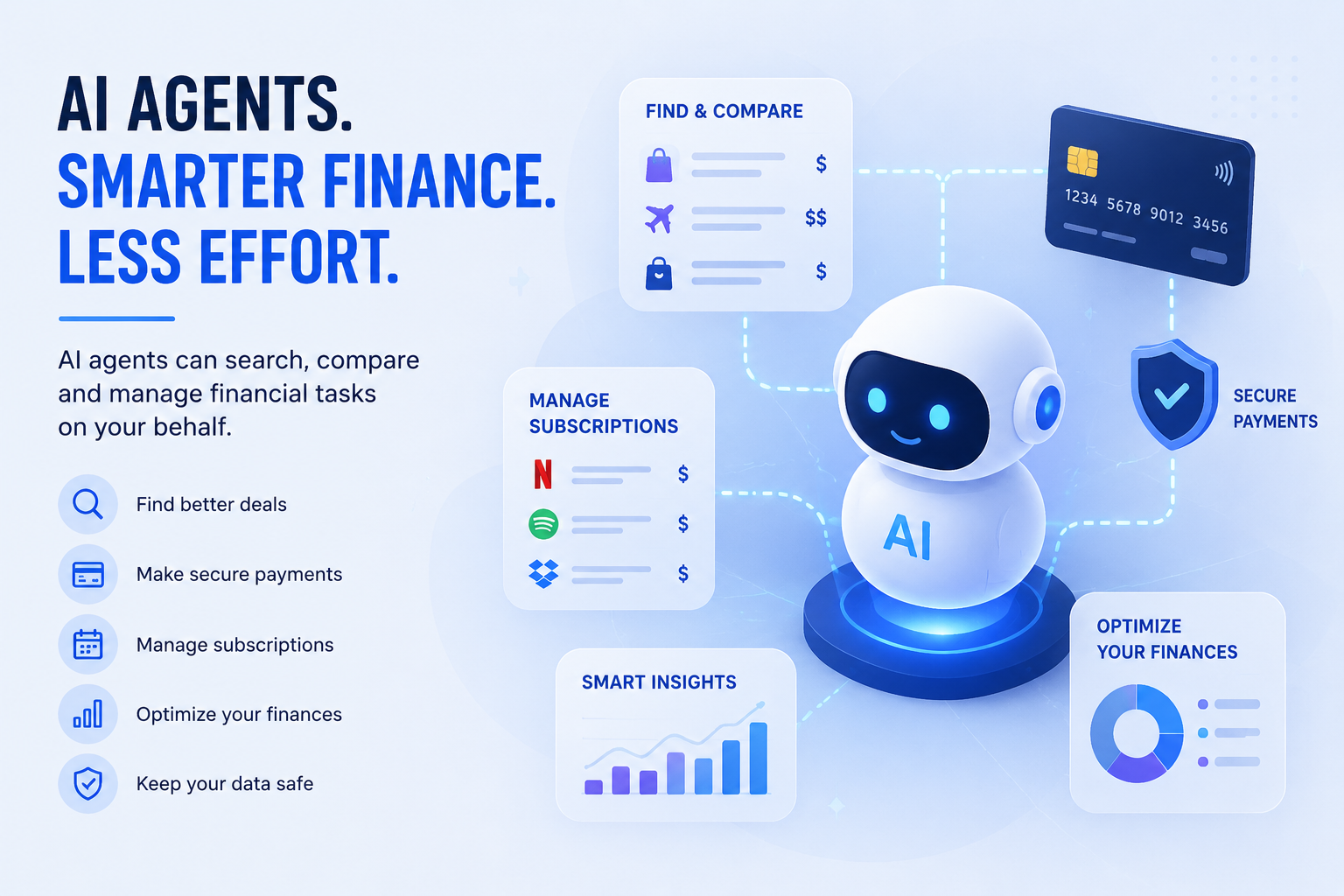
Across the fintech industry, attention is shifting toward agentic commerce — a model in which artificial intelligence agents can perform financial tasks on behalf of users. Major technology and payment companies are already building frameworks designed to support this new ecosystem.
What Is Agentic Commerce?
Traditional digital banking still requires users to make most decisions manually.
Agentic commerce introduces a different approach.
Instead of simply providing information, AI systems can potentially:
- Compare financial products
- Search for better prices
- Execute approved purchases
- Monitor subscriptions
- Optimize recurring payments
- Assist with financial planning
The goal is to reduce friction between decision-making and action.
Payments Are Becoming More Intelligent
Payment networks are preparing for a future in which AI agents may participate directly in transactions.
Industry initiatives are focusing on verification, authorization, identity management, and security frameworks that allow AI systems to interact safely with merchants and financial institutions.
This could fundamentally change how consumers interact with financial services.
The Evolution of Digital Banking
| Banking Era | Primary User Action |
|---|---|
| Branch Banking | Visit a physical location |
| Online Banking | Access services through a website |
| Mobile Banking | Manage finances through apps |
| Agentic Banking | Delegate financial tasks to AI |
Each stage has reduced the effort required from users.
Agentic systems may represent the next step in this progression.
Financial Institutions Are Paying Attention
Banks, fintech companies, and payment providers are investing heavily in AI-driven financial services.
Recent industry developments show growing interest in AI systems capable of performing increasingly complex tasks rather than simply answering questions.
This shift reflects a broader movement toward automation across the financial sector.
Trust Will Determine Adoption
While the opportunities are significant, trust remains one of the biggest challenges.
Consumers must feel confident that AI systems can:
- Protect sensitive data
- Follow user instructions
- Avoid unauthorized actions
- Maintain transparency
- Operate securely
Without strong trust frameworks, adoption could slow considerably.
New Opportunities for Consumers
If implemented successfully, agentic commerce could help users:
- Save time
- Reduce financial friction
- Improve spending decisions
- Discover better offers
- Manage recurring expenses more efficiently
Instead of manually managing every transaction, users may increasingly supervise intelligent systems that act on their behalf.
Looking Ahead
The fintech industry has spent years digitizing financial services. The next phase may focus on delegating parts of those services to trusted AI agents.
Although the technology remains in its early stages, momentum is growing rapidly across banking, payments, and digital commerce.
In 2026, agentic commerce is moving from concept to reality, and it may become one of the most important developments in financial technology since the rise of mobile banking.
