
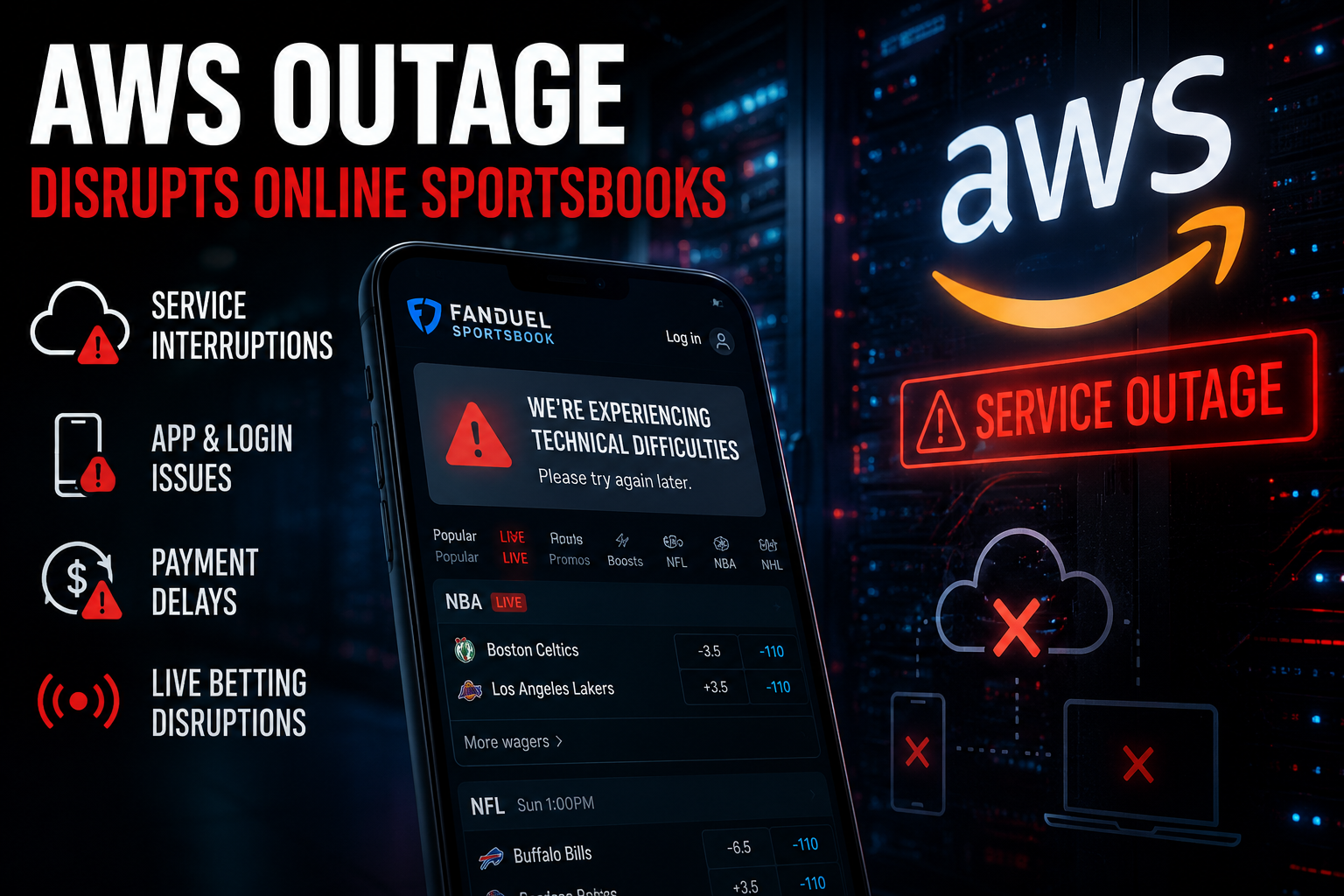
A major AWS outage recently triggered widespread disruption across several online sportsbooks, sports betting apps and digital platforms, highlighting how dependent the gambling industry has become on cloud infrastructure services.
The incident affected multiple high-traffic platforms, with users reporting sportsbook login failures, delayed bet processing, payment interruptions and temporary access problems during peak activity periods. Alongside online betting operators, cryptocurrency platforms and other digital services also experienced instability linked to the Amazon Web Services disruption.
Although most affected platforms eventually restored normal functionality, the outage raised fresh concerns about infrastructure reliability inside the online gambling industry.
AWS Outage Creates Problems for Sports Betting Platforms
Amazon Web Services remains one of the world’s largest cloud hosting providers, supporting infrastructure for online sportsbooks, casino operators, fintech services and crypto exchanges.
When AWS systems experience technical problems, the impact can spread rapidly across multiple industries. During the recent disruption, several sports betting platforms reported issues involving:
- Slow sportsbook loading times
- Temporary login failures
- Bet settlement delays
- Interrupted live betting services
- Payment processing instability
- Mobile app connection errors
For online sportsbooks handling real-time wagers during live sporting events, even short periods of downtime can create significant operational and financial pressure.
Sports Betting Apps Depend Heavily on Cloud Infrastructure
Modern sports betting apps rely heavily on cloud computing providers like AWS to manage traffic spikes, live odds updates, payment systems and account management infrastructure.
Cloud hosting allows betting operators to scale rapidly during major sporting events without maintaining expensive physical server networks internally.
However, incidents like this also demonstrate the risks associated with concentrating critical gambling operations on a limited number of infrastructure providers.
How the AWS Outage Affected Online Gambling Services
| Service Area | Reported Issues | Potential Impact |
|---|---|---|
| Sportsbook logins | Access failures and delays | Users unable to place bets |
| Live betting systems | Odds refresh interruptions | In-play wagering instability |
| Payment processing | Deposit and withdrawal delays | Transaction frustration for users |
| Mobile sportsbook apps | Connection and loading issues | Reduced app usability |
| Account management | Temporary synchronization problems | User balance display issues |
| Crypto integrations | API instability | Delayed transaction confirmations |
FanDuel and Other Major Platforms Experienced Disruption
Several users reported temporary service instability across major sports betting and digital finance platforms during the AWS incident. FanDuel customers in particular experienced login and sportsbook access problems as traffic levels remained high.
At the same time, crypto-related platforms and trading services also reported technical difficulties connected to the wider AWS outage.
The situation demonstrated how a single cloud infrastructure failure can impact multiple sectors simultaneously, including online gambling, cryptocurrency trading and financial technology services.
Infrastructure Stability Is Becoming a Bigger Issue for Online Betting Operators
As the online gambling industry continues growing globally, sportsbook reliability and uptime are becoming increasingly important competitive factors.
Modern bettors expect:
- Instant sportsbook access
- Stable live betting functionality
- Fast payment processing
- Reliable mobile app performance
- Continuous account availability
Even brief outages during major sporting events can damage user trust and create customer retention problems for betting operators.
Cloud Dependency Creates Operational Risks
The recent AWS outage also exposed how dependent online sportsbooks and casino platforms have become on third-party infrastructure providers.
While cloud hosting offers scalability and flexibility, operators may face significant risks when outages occur across centralized systems.
Industry analysts believe gambling companies may increasingly invest in:
- Multi-cloud infrastructure strategies
- Backup hosting environments
- Distributed server architecture
- Improved failover systems
- Advanced disaster recovery planning
These measures could help reduce the impact of future cloud service interruptions.
Live Betting Systems Are Especially Vulnerable
One of the biggest challenges during infrastructure outages involves live betting functionality. In-play sportsbooks rely on continuous real-time data feeds, odds updates and rapid transaction processing.
When server instability affects these systems, sportsbooks may temporarily suspend betting markets or experience delayed wager confirmations.
For operators handling high-volume events such as football matches, NBA games or major combat sports cards, even small technical disruptions can lead to major financial exposure.
Online Gambling Platforms Continue Recovering After AWS Incident
Most affected sportsbook operators and digital services restored normal functionality relatively quickly following the AWS disruption. However, the incident has renewed discussion about long-term infrastructure resilience inside the online betting industry.
As sports betting platforms continue expanding globally, maintaining stable cloud infrastructure will likely become one of the industry’s most important operational priorities.
Conclusion
The recent AWS outage highlighted how vulnerable online sportsbooks and betting apps can become when major cloud infrastructure providers experience technical problems.
From sportsbook login failures to payment delays and interrupted live betting services, the incident affected multiple areas of the online gambling ecosystem.
As the sports betting industry grows increasingly reliant on cloud computing, operators may need to invest more heavily in infrastructure redundancy and stability to reduce the impact of future outages.
