
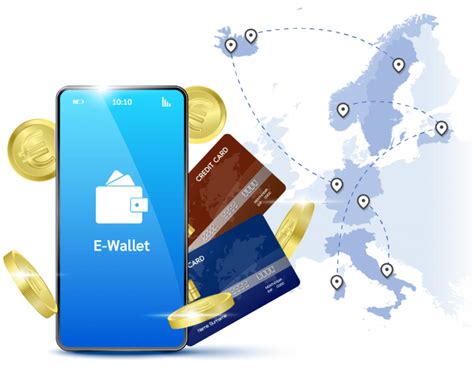
Europe has spent years building successful domestic payment systems, but sending money between countries can still be less straightforward than making a local transfer. A person in Spain might use Bizum, someone in Italy may prefer Bancomat, while consumers elsewhere rely on Wero, MB WAY or Vipps MobilePay. Each service can work efficiently within its own market, yet those advantages do not automatically extend across national borders.
A newly announced initiative aims to address that fragmentation. On September 30, 2026, several major European payment providers confirmed the formation of the European Network for Payments (ENP), a joint venture designed to connect existing domestic platforms through shared technical and operational standards.
The participating systems collectively serve approximately 130 million users across 13 countries, representing more than 70% of the combined population of the European Union and Norway. Rather than asking consumers to abandon familiar payment applications, the project intends to make those services work together. For Europe’s fintech industry, the announcement represents an important shift in how cross-border payment infrastructure could develop.
What Is the European Network for Payments?
The European Network for Payments is a joint initiative bringing together established payment providers from several European markets. The organisation will be headquartered in Madrid and will work towards creating interoperability between systems that currently operate primarily within their respective national environments.
Its founding participants include Bizum, Bancomat, Wero, SIBS-MB WAY and Vipps MobilePay. These platforms already have substantial user bases and established relationships with financial institutions. Connecting them offers a different approach from developing a completely new payment brand and persuading millions of consumers to adopt it.
The initial objective is to support person-to-person payments across participating markets. Later stages are expected to expand into e-commerce and physical retail transactions.
The Founding Payment Systems
| Payment system | Main market or regional presence | Role in the initiative |
|---|---|---|
| Bizum | Spain | Connect an established domestic payment ecosystem |
| Bancomat | Italy | Support interoperability with Italian payment infrastructure |
| Wero | European markets | Contribute to broader European payment connectivity |
| SIBS-MB WAY | Portugal | Link an established mobile payment service |
| Vipps MobilePay | Nordic markets | Extend connectivity across Northern Europe |
The network’s proposed structure allows participants to retain their existing brands and customer relationships while adopting common standards for transactions between systems. This is an important distinction. The project is not simply another payment application competing for space on consumers’ smartphones. It aims to connect infrastructure that people already use.
Why Europe’s Payment Market Remains Fragmented
European consumers have access to sophisticated banking infrastructure, including SEPA transfers and an expanding instant-payment ecosystem. Nevertheless, the experience of paying another person can still vary significantly depending on the countries and applications involved.
Domestic payment services often succeed because they understand local habits. They integrate with familiar banks, support convenient account identification and provide interfaces designed around their home markets. The difficulty appears when those domestic systems need to communicate.
A consumer may be able to send money to a friend locally using only a telephone number but find that the same process does not work when the recipient lives across the border. The underlying banking infrastructure might support international transfers, yet the convenient user experience does not necessarily travel with it. ENP is intended to address this gap through interoperability rather than by replacing successful domestic products.
How Could Cross-Border Payments Work?
The proposed model is based on a standardized technical and operational framework connecting participating payment platforms. Instead of every provider negotiating separate arrangements with every other service, a shared network could establish common requirements for exchanging payment instructions and handling transactions.
Consider a hypothetical example involving two consumers in different European countries. One uses Bizum through a Spanish bank, while the other relies on a compatible service connected to the network. If the relevant systems are integrated, the sender could potentially initiate a payment through their existing application without requiring the recipient to register for the same domestic platform.
The precise customer journey will depend on the final implementation, participating institutions and supported services. The broader concept, however, is straightforward: interoperability should reduce the importance of which payment brand each person happens to use.
The Difference Between Three Payment Models
| Model | How it operates | Main consideration |
|---|---|---|
| Traditional bank transfer | Money moves using bank account details and payment infrastructure | Familiar but not always convenient for casual transfers |
| Domestic payment app | Users send money through a local service | Convenience may be limited outside its home market |
| Interoperable payment network | Different domestic platforms communicate through shared standards | Depends on technical integration and participant coverage |
For fintech providers, this architecture could reduce the need to build multiple independent integrations when entering additional European markets.
Why the Initiative Matters Beyond Consumer Convenience
Making it easier to split a restaurant bill or repay a friend abroad is useful, but ENP has wider economic implications. Europe’s payment market remains heavily influenced by international card networks, particularly Visa and Mastercard. While these companies provide extensive global infrastructure, European institutions have increasingly discussed the importance of developing additional regional payment capabilities.
The new network reflects that ambition. Connecting established European payment providers could strengthen competition and give financial institutions, merchants and consumers more choice over how transactions are initiated and processed.
However, reducing reliance on international networks is not the same as eliminating them. Card payments will continue serving important functions, particularly in international commerce and situations requiring established consumer protection mechanisms. The significance of ENP lies in creating another viable infrastructure option rather than assuming that one payment model should replace every alternative.
The Next Step Could Be Online Shopping
Although person-to-person transfers represent the initial priority, the proposed expansion into e-commerce could have broader consequences for payment providers and merchants. Online businesses already manage several payment methods to accommodate customer preferences. Card payments, bank transfers, digital wallets and local payment systems often operate alongside one another. For merchants selling across multiple European markets, this can create additional integration and operational requirements. A more interoperable regional network could eventually simplify access to account-based payment methods across participating countries.
Potential benefits include:
- Allowing consumers to use familiar payment services when shopping abroad.
- Reducing the need for merchants to integrate separate domestic systems individually.
- Supporting additional competition in online payment acceptance.
- Creating opportunities for fintech companies developing payment orchestration services.
- Extending existing national payment infrastructure into new markets.
These outcomes remain dependent on the network’s commercial arrangements, merchant adoption and technical development. The initial announcement should not be interpreted as confirmation that every participating service already supports cross-border retail payments.
Interoperability Is Also a Technical Challenge
Connecting established payment systems is considerably more complicated than adding a new button to an application. Each participating platform has its own infrastructure, operational procedures, security arrangements and relationships with financial institutions. Successful interoperability requires agreement on how those systems communicate and what happens when a transaction encounters a problem.
Several issues will need careful coordination:
- Identity and authentication: Ensuring that payment instructions originate from legitimate users.
- Transaction routing: Directing payments accurately between participating systems.
- Fraud prevention: Maintaining effective controls across different jurisdictions.
- Dispute handling: Establishing clear responsibilities when transactions fail or are contested.
- Operational reliability: Keeping connected services available during periods of heavy activity.
- Customer communication: Providing understandable payment confirmations and error messages.
These requirements demonstrate why interoperability is primarily an infrastructure project, even if its eventual success is measured through the simplicity of the consumer experience.
How Does ENP Relate to the Digital Euro?
The European Network for Payments arrives while European institutions are also developing other initiatives intended to strengthen the region’s financial infrastructure. One prominent example is the digital euro project led by the European Central Bank. Although both developments contribute to discussions about European payment autonomy, they should not be confused. ENP seeks to connect existing payment services. The digital euro concerns a potential digital form of central bank money with a different institutional and technical foundation.
Their objectives may overlap in areas such as accessibility and payment choice, but the projects are not interchangeable. The emergence of ENP illustrates that Europe’s payments strategy can develop through several parallel approaches, including improvements to existing infrastructure, private-sector cooperation and potential public digital money.
What Should Fintech Companies Watch Next?
The announcement establishes the direction of the initiative, but its practical significance will depend on execution. For fintech companies, payment providers and merchants, several developments deserve attention over the coming months.
The first is the publication of a detailed technical framework. This should provide greater clarity about how participating systems will connect and which services will become available. The second is the implementation schedule. Connecting existing providers across multiple jurisdictions requires coordination, testing and operational agreements.
The third is commercial adoption. Even an effective technical network needs financial institutions and merchants to support it before consumers experience its full benefits. Finally, expansion beyond the founding participants will help determine whether ENP becomes a broadly accessible European payment network or remains concentrated in its initial markets.
A Different Direction for European Payments
The creation of the European Network for Payments highlights an important principle in financial technology: innovation does not always require replacing existing services. Europe already has several successful domestic payment platforms. Their fragmentation, rather than their individual capabilities, is part of the challenge ENP intends to address.
By connecting systems serving approximately 130 million users across 13 countries, the initiative begins with an established customer base instead of attempting to build one from scratch. Its initial focus on person-to-person transfers provides a practical starting point, while the planned expansion into online and physical commerce introduces a potentially wider role in European payments.
The coming implementation stages will determine how effectively the participating organisations translate their shared ambitions into reliable services. If interoperability works as intended, the most noticeable change for consumers may be remarkably simple: sending money across a European border could begin to feel much more like sending it to someone in the same country.
