
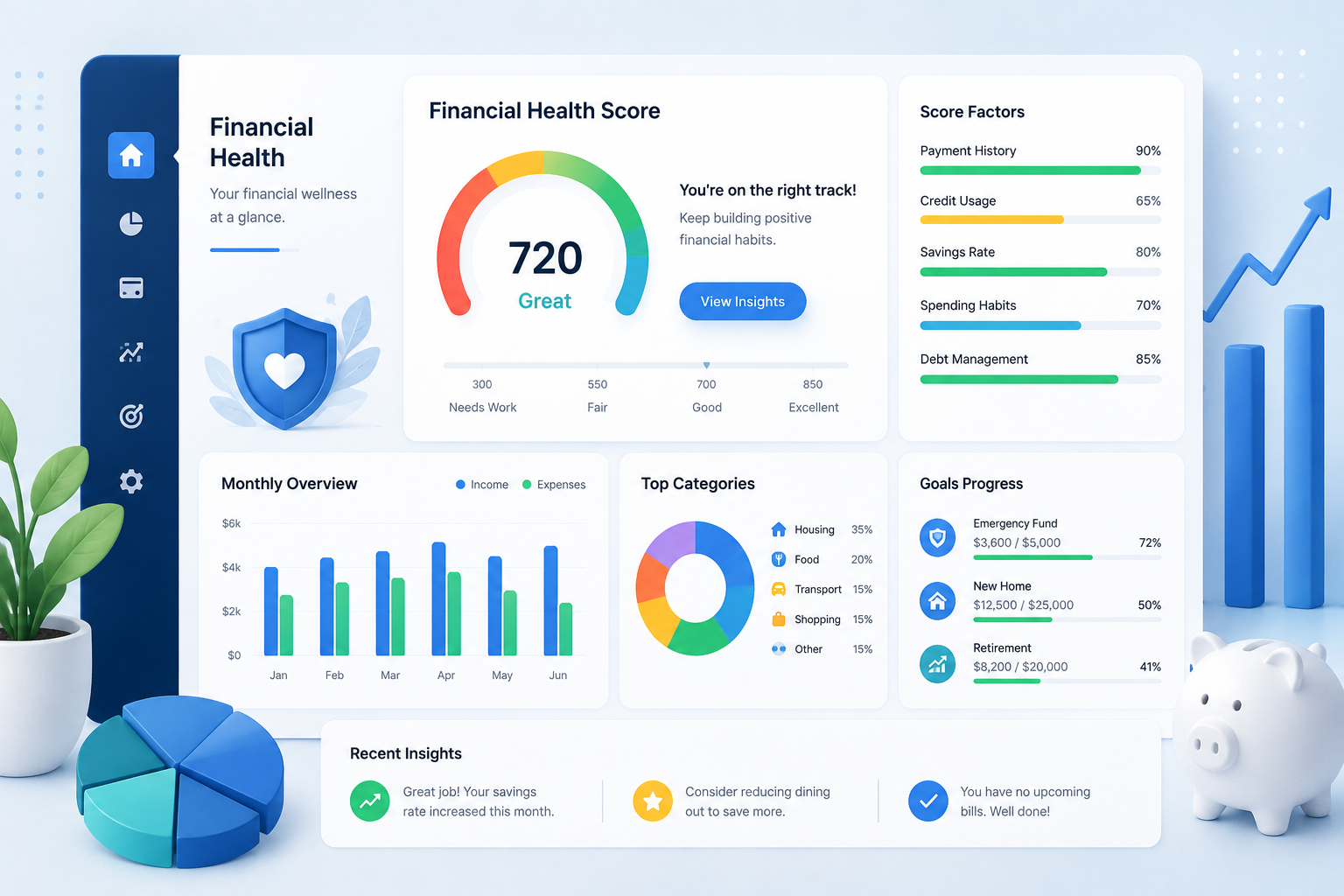
Digital banking has evolved far beyond checking balances and transferring money. In 2026, one of the fastest-growing innovations is the introduction of financial health scores—dynamic indicators that measure how effectively individuals manage their finances. Unlike traditional credit scores, these tools focus on improving daily financial habits rather than simply evaluating borrowing risk.
Banks and fintech companies are increasingly integrating personalized financial health metrics into their mobile apps, giving customers practical guidance that encourages smarter decisions every day.
What Is a Financial Health Score?
A financial health score combines multiple aspects of personal finance into a single easy-to-understand indicator. Instead of concentrating only on debt, it evaluates broader financial behaviors, including:
- savings consistency;
- emergency fund progress;
- spending stability;
- recurring bill management;
- debt-to-income balance;
- investment activity;
- budgeting habits.
The objective is not to judge users but to provide a clear snapshot of their overall financial wellbeing.
Turning Banking Into Financial Coaching
Traditional banking platforms mainly recorded transactions. Modern platforms increasingly act as digital financial coaches.
When a customer’s financial health score changes, the application can explain why. For example, a higher score may result from consistent savings or lower credit utilization, while a decline might reflect increasing discretionary spending or missed financial goals. These insights encourage continuous improvement rather than occasional financial reviews.
Personalized Improvement Plans
Rather than offering generic budgeting advice, today’s banking apps generate customized recommendations based on individual behavior.
Users may receive suggestions such as:
- increasing monthly savings by a small percentage;
- reducing recurring subscriptions;
- building a three-month emergency fund;
- paying high-interest debt first;
- maintaining a healthier spending ratio.
Because recommendations are tailored to personal financial situations, they are far more actionable than traditional educational content.
Encouraging Positive Financial Habits
Gamification has become an important part of financial health platforms.
Many banks now reward positive financial behavior through:
- milestone badges;
- savings streaks;
- monthly financial achievements;
- personalized progress tracking;
- goal completion rewards.
These features help transform financial management into an engaging long-term habit rather than an occasional task.
Better Long-Term Planning
Financial health scores also support larger life goals. Users preparing to buy a home, start a business, or invest for retirement can monitor steady improvements over months and years instead of focusing solely on account balances. The score becomes a benchmark for overall financial readiness, making long-term planning easier and more measurable.
Privacy and Responsible Data Use
Because financial health scoring relies on personal financial information, transparency remains essential.
Leading financial institutions emphasize:
- encrypted financial data;
- user-controlled privacy settings;
- explainable AI recommendations;
- secure identity verification;
- compliance with financial data regulations.
Responsible data practices are fundamental to maintaining customer trust.
The Future of Smarter Banking
Financial health scores are quickly becoming a standard feature across modern banking platforms. Instead of simply showing customers where their money went, banks are helping them understand financial behavior, build stronger habits, and make more confident decisions.
As artificial intelligence continues advancing, these intelligent financial wellness tools will play an even larger role in creating personalized, proactive banking experiences that support long-term financial success.
