
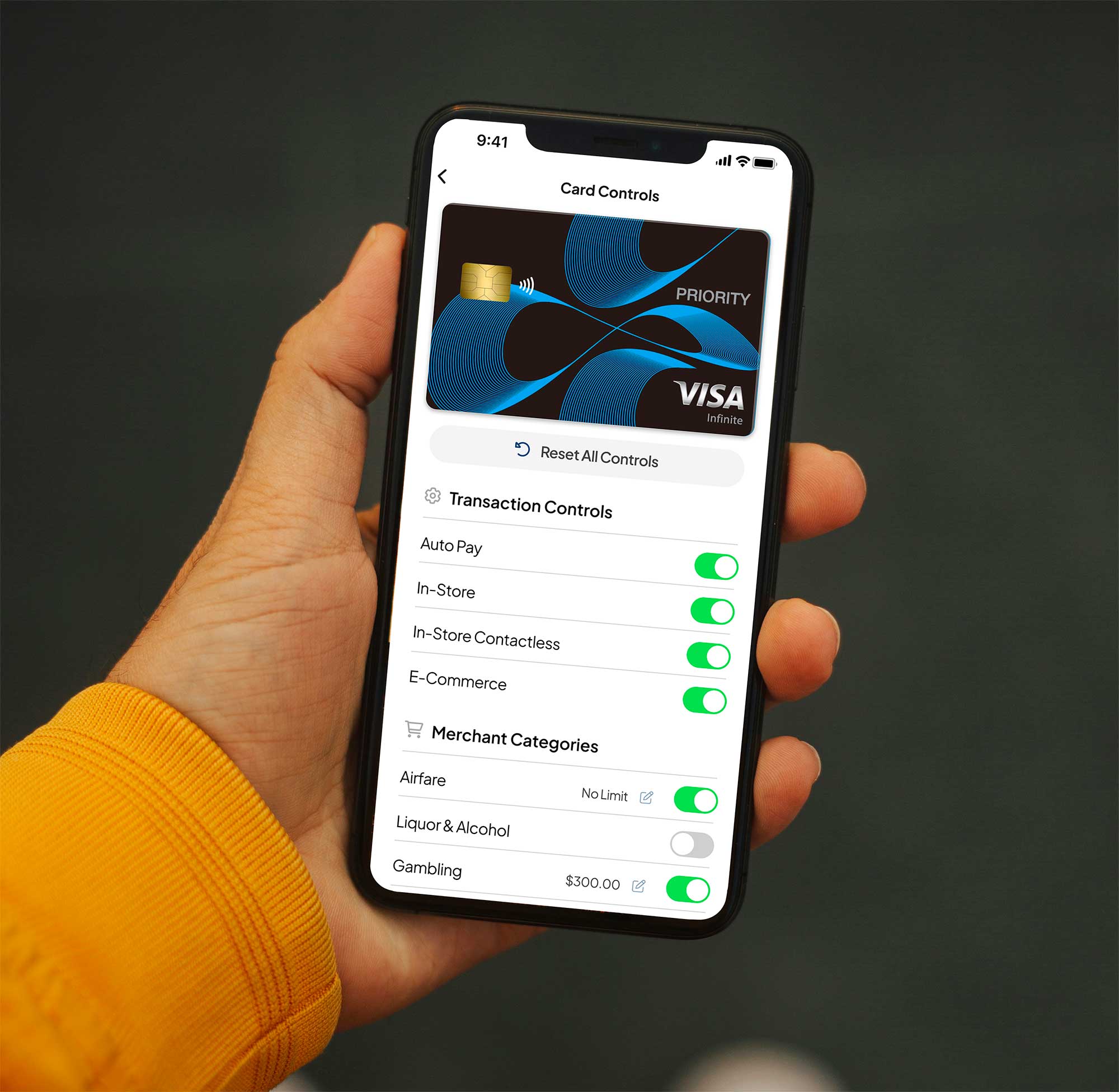
Digital banking used to give customers only a few basic ways to manage a card. Users could check a balance, review transactions, report a card lost, or request a replacement. That model is changing as banks introduce much more detailed controls directly inside mobile apps.
Granular card controls allow users to decide how a card can be used rather than simply switching it on or off. Spending limits, merchant restrictions, country settings, online payment permissions, and transaction rules can increasingly be managed from a single interface. The result is a banking experience that gives users more direct control over everyday spending and card security.
From Freeze Buttons to Detailed Rules
The ability to freeze a card instantly was an important step in mobile banking. It gave customers a way to respond quickly if a card was misplaced without immediately cancelling it. Granular controls take that idea further.
Instead of making a card completely active or inactive, users can apply specific restrictions. Depending on the service, controls may include:
- Daily or monthly spending limits
- Maximum amounts for individual purchases
- Merchant category restrictions
- Online transaction permissions
- International usage settings
- ATM withdrawal controls
- Contactless payment settings
- Geographic restrictions
Visa describes transaction controls that allow cardholders to manage how, when, and where enrolled cards can be used, while Mastercard offers spend-control systems built around authorization rules.
Spending Limits Become More Flexible
Traditional card limits are often determined by the bank or account type. Modern controls allow customers to create additional personal limits beneath those maximums.
Someone trying to manage discretionary spending could set a weekly card budget. A parent might create a lower limit for a card used by another household member. A business could restrict employee spending according to role or purpose. These controls turn the card itself into a budgeting tool. Rather than discovering overspending at the end of the month, users can create boundaries before transactions happen.
Merchant Categories Add Another Layer of Control
Not all spending limits need to apply equally. Card networks use merchant category codes to identify broad types of businesses. Modern card-control systems can use these categories to allow or restrict particular types of purchases.
A card could, for example, remain available for transportation and groceries while restricting another category. This capability is especially useful for business cards, family accounts, travel budgets, and purpose-specific virtual cards. Visa and Mastercard both document controls that can be applied using merchant categories.
Security Becomes More User-Directed
Granular controls also change how users approach card security. Traditional fraud prevention happens mostly behind the scenes. Banks monitor activity and may block suspicious transactions automatically. User-controlled restrictions add another layer.
A customer who rarely shops internationally can disable foreign transactions until they are needed. Someone who does not use ATMs can switch off cash withdrawals. Online purchases can potentially be restricted when the card is primarily used in physical stores. The card remains usable, but its attack surface becomes narrower.
Travel Is a Good Example
Travel often creates an unusual spending pattern. A card that is normally used in one country may suddenly appear in several new locations, with different merchants and currencies. Granular controls can make that transition easier. Before travelling, a user could enable international transactions, adjust spending limits, or permit ATM withdrawals. After returning home, those permissions could be tightened again. This creates a temporary card profile suited to a specific situation rather than leaving every payment channel permanently available.
Business Banking Benefits Even More
The impact becomes particularly clear in business finance. Companies often issue cards to employees who need to purchase specific goods or services. Traditional corporate cards may require finance teams to monitor expenses after they occur. Modern controls can establish rules before a payment is authorized.
Possible restrictions include:
| Control | Example Use |
|---|---|
| Transaction limit | Prevent unusually large purchases |
| Merchant category | Restrict spending to approved industries |
| Location | Limit usage to specific countries |
| Time period | Allow spending only during a project |
| Total budget | Cap monthly employee expenses |
Visa’s commercial payment controls include near-real-time rules based on spending, merchant category, location, channel, and business hours. Mastercard also supports configurable controls around transaction amounts and merchant categories.
Virtual Cards Make Controls Even More Precise
Virtual cards are expanding this idea further. Because digital card numbers can be generated for particular purposes, banks and fintech platforms can attach different rules to each card rather than relying on one physical card for every transaction.
A user or business might create separate virtual cards for:
- Online subscriptions
- Travel
- Business software
- Advertising expenses
- Contractor purchases
- One-time transactions
Each card can potentially have its own limit and usage restrictions. Visa notes that virtual cards can be paired with custom spending limits and merchant controls, while Mastercard supports restrictions for individual virtual card numbers.
Better Controls Can Improve Financial Awareness
Card controls are not only defensive tools. They also encourage users to think about spending before it occurs. Creating a limit requires someone to decide what a reasonable amount actually is. Restricting certain categories forces users to consider how they want a card to be used. This makes card management more proactive. Instead of relying entirely on monthly reports and retrospective analysis, customers can build financial rules into everyday transactions.
The Interface Matters
These features only work well when they remain easy to understand. A banking app with dozens of complicated switches can create more confusion than control. The best implementations group settings logically and explain what will happen when a rule is activated.
Users need clear information about:
- Which card a rule affects
- When the restriction begins
- Which transactions will be blocked
- How to change the setting
- Whether declined payments trigger alerts
Granular functionality therefore creates a design challenge as well as a technical one.
Card Management Is Becoming More Active
The broader change is that digital banking is moving away from passive card management. Customers once received a card with predefined rules and largely accepted those settings. Modern apps increasingly allow users to shape card behavior around their own circumstances.
That shift supports several trends at once: stronger security, more flexible budgeting, better family money management, and more precise business spending controls. As card networks and financial institutions continue expanding these capabilities, the card is becoming less like a fixed payment instrument and more like a configurable financial tool. For users, the benefit is straightforward: greater control over what happens before money leaves the account.
