
For years, wealth management and everyday banking existed as two separate worlds. Traditional banking focused on checking accounts, payments, loans, and savings, while wealth management was reserved for investment portfolios, retirement planning, and high-net-worth clients. That distinction is beginning to disappear.
Across the financial industry, banks are building platforms that combine daily banking services with long-term wealth management into one connected experience. Instead of moving between multiple providers, customers increasingly expect to manage cash, investments, borrowing, and financial planning from a single ecosystem.
Recent industry developments demonstrate this shift. Banks including UBS are expanding integrated banking services for wealth clients, while institutions such as OCBC are investing heavily in combining digital banking, AI-powered wealth tools, and human financial advisors into unified platforms. Rather than being a temporary trend, integrated banking is quickly becoming one of the defining directions for modern financial services.
Customers No Longer Separate Banking From Investing
Financial decisions rarely happen in isolation. A salary arrives in a checking account. Some money pays monthly expenses. Another portion goes into savings. Part may be invested. A mortgage payment follows.
Later, retirement planning becomes relevant. Historically, each of these activities often required different institutions. Modern customers increasingly expect all of these financial tasks to work together instead of existing in separate systems.
One Financial Picture Creates Better Decisions
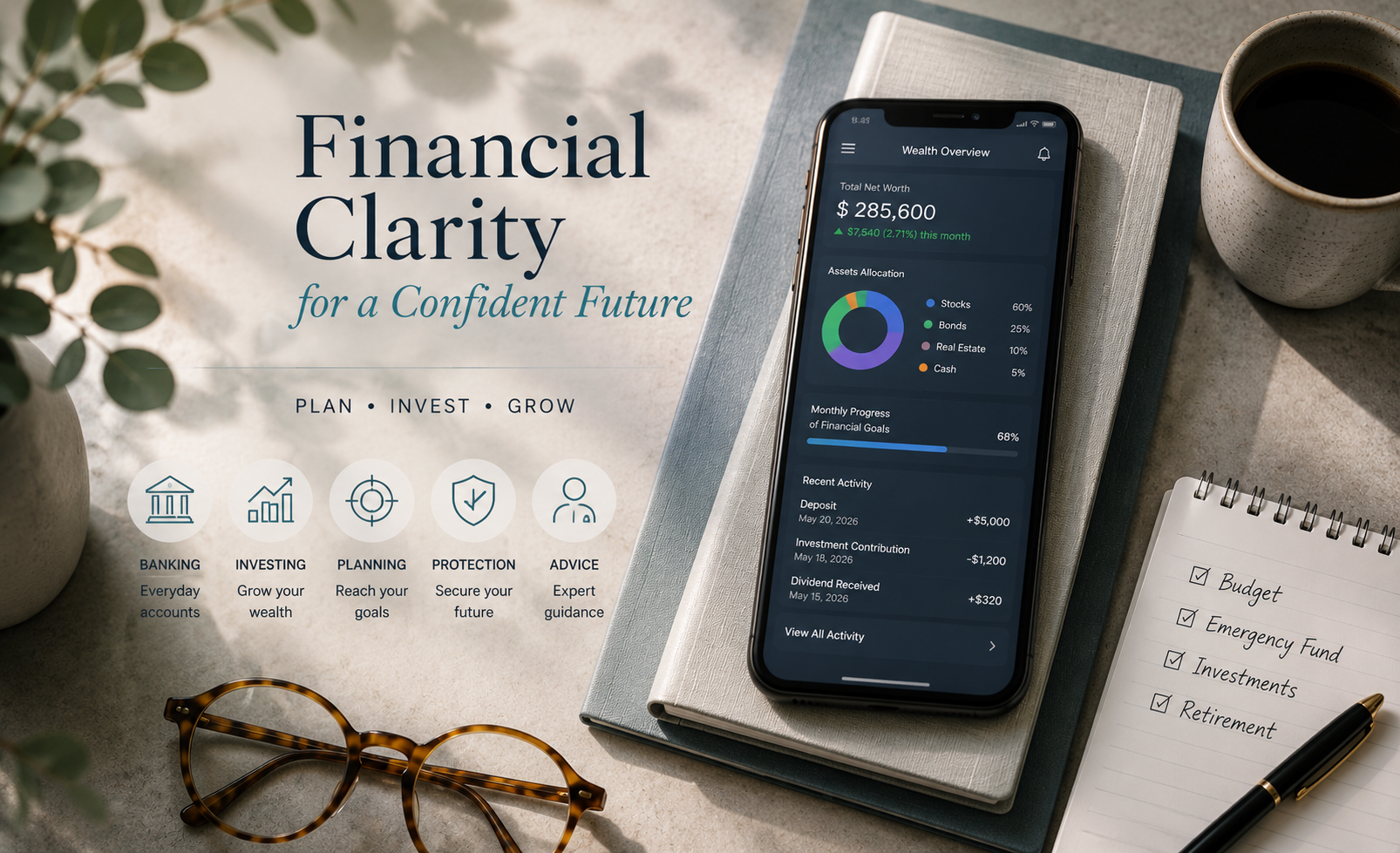
Integrated banking allows customers to see their complete financial position instead of isolated account balances. Rather than viewing investments separately from cash reserves or liabilities, users can understand how every financial decision affects their overall situation. This broader perspective makes planning significantly easier.
Examples include:
- investment performance alongside available cash;
- loan obligations compared with savings growth;
- retirement progress combined with current spending;
- emergency funds relative to monthly expenses;
- asset allocation alongside future financial goals.
Having one complete financial picture reduces uncertainty and improves confidence when making important decisions.
Wealth Management Is Becoming More Accessible
Private wealth services were once associated almost exclusively with affluent clients. Technology is changing that perception. Digital platforms now automate many administrative tasks, allowing financial guidance to reach a much wider audience.
Instead of waiting until someone has accumulated substantial wealth, institutions increasingly introduce investment planning much earlier in the customer journey. This approach helps individuals develop healthier financial habits over many years rather than beginning only after significant assets have been accumulated.
Banking Relationships Are Becoming Longer
Traditional banking relationships often revolved around simple products. Customers opened an account, received a debit card, and occasionally applied for a loan. Integrated wealth platforms encourage much deeper relationships.
As financial needs evolve, customers may gradually add:
- investment accounts;
- retirement planning;
- insurance products;
- estate planning;
- education savings;
- tax-efficient strategies.
Rather than switching providers whenever life circumstances change, customers remain within the same financial ecosystem.
Technology Connects Previously Separate Services
One reason this transformation is happening now is improvements in financial technology. Modern banking platforms allow information to flow securely between different financial products. Instead of manually transferring data between systems, customers benefit from connected services that update automatically.
For example, increased income may influence investment recommendations, while major purchases can be reflected within broader financial planning. These connections help create more relevant financial insights without requiring users to perform complex calculations themselves.
Human Advisors Continue to Play an Important Role
Although automation is expanding rapidly, integrated wealth management is not replacing financial professionals. Instead, technology increasingly supports advisors by reducing repetitive administrative work and providing faster access to client information. Recent initiatives demonstrate this balanced approach.
OCBC recently introduced AI-powered wealth tools while simultaneously announcing plans to hire hundreds of additional relationship managers, reinforcing that technology is intended to strengthen—not replace—human advice. The future appears to combine digital efficiency with personalised human expertise.
Daily Banking Becomes More Strategic
Integrated platforms also change how customers think about everyday money management. Checking accounts are no longer viewed simply as places to store cash.
Instead, everyday banking activity becomes part of a larger financial strategy. Regular income, spending behaviour, savings habits, and investment contributions all work together toward longer-term objectives. This creates a more proactive relationship with money.
Personalisation Improves Naturally
When banking and wealth management operate within the same ecosystem, financial institutions gain a more complete understanding of customer needs. This allows recommendations to become increasingly relevant without relying on excessive manual input.
Rather than offering generic investment suggestions, platforms may consider factors such as:
- savings behaviour;
- income consistency;
- existing financial commitments;
- long-term objectives;
- liquidity requirements.
The result is guidance that feels more personalised while remaining grounded in actual financial circumstances.
Security Becomes Even More Important
Combining multiple financial services naturally increases the importance of security. Integrated wealth platforms therefore continue investing in:
| Security Feature | Customer Benefit |
|---|---|
| Multi-factor authentication | Stronger account protection |
| Biometric login | Faster secure access |
| Real-time fraud monitoring | Early detection of suspicious activity |
| Encrypted data sharing | Safer financial information |
| Identity verification | Reduced account takeover risk |
| Continuous risk analysis | Better protection across products |
Maintaining trust remains essential as financial ecosystems become more interconnected.
Global Banks Are Accelerating This Strategy
Recent announcements suggest that integrated banking is becoming a strategic priority across the industry. UBS is preparing to expand full-service banking capabilities for wealthy American clients by combining investment management with everyday banking products, including checking accounts, mortgages, and lending services.
Meanwhile, OCBC is combining AI-powered banking experiences with expanded wealth advisory services as part of its long-term growth strategy. Although each institution approaches integration differently, the overall direction is remarkably consistent.
What This Means for Customers
Integrated banking is likely to simplify financial management in several ways.
Customers can expect:
- fewer disconnected financial platforms;
- improved visibility across all assets;
- smoother transitions between banking and investing;
- more personalised financial guidance;
- better long-term planning tools;
- faster access to professional advice.
Rather than managing individual products independently, people increasingly interact with a complete financial ecosystem.
Looking Ahead
The next generation of wealth management will probably feel less like a specialised investment service and more like an everyday extension of digital banking. Customers will move seamlessly between making payments, reviewing investment performance, adjusting savings goals, applying for credit, and consulting financial advisors—all within a single platform.
Banks that successfully integrate these services while maintaining security, transparency, and personalised guidance will likely strengthen customer loyalty and build longer-lasting relationships.
Final Thoughts
Integrated banking represents one of the most significant changes currently shaping the financial industry. By bringing together wealth management, everyday banking, lending, and digital financial planning, institutions are creating more connected experiences that reflect how people actually manage money.
Recent developments from major financial institutions indicate that this transformation is already underway, driven by advances in technology and changing customer expectations. As these platforms continue evolving, the distinction between traditional banking and wealth management is likely to become increasingly difficult to notice, creating a simpler, more unified approach to personal finance.
