For years, personal finance advice focused heavily on budgeting. People were encouraged to track expenses, categorize spending, and review monthly statements. While these practices remain useful, a growing number of consumers are shifting their attention toward something more forward-looking: cash-flow forecasting. Instead of analyzing where money went last month, individuals are increasingly asking a different question: where will my money be next month?
This shift reflects a broader change in how people approach financial management. In an environment shaped by fluctuating expenses, changing income sources, and economic uncertainty, forecasting future cash flow is becoming one of the most valuable financial habits of 2026.
What Is Cash-Flow Forecasting?
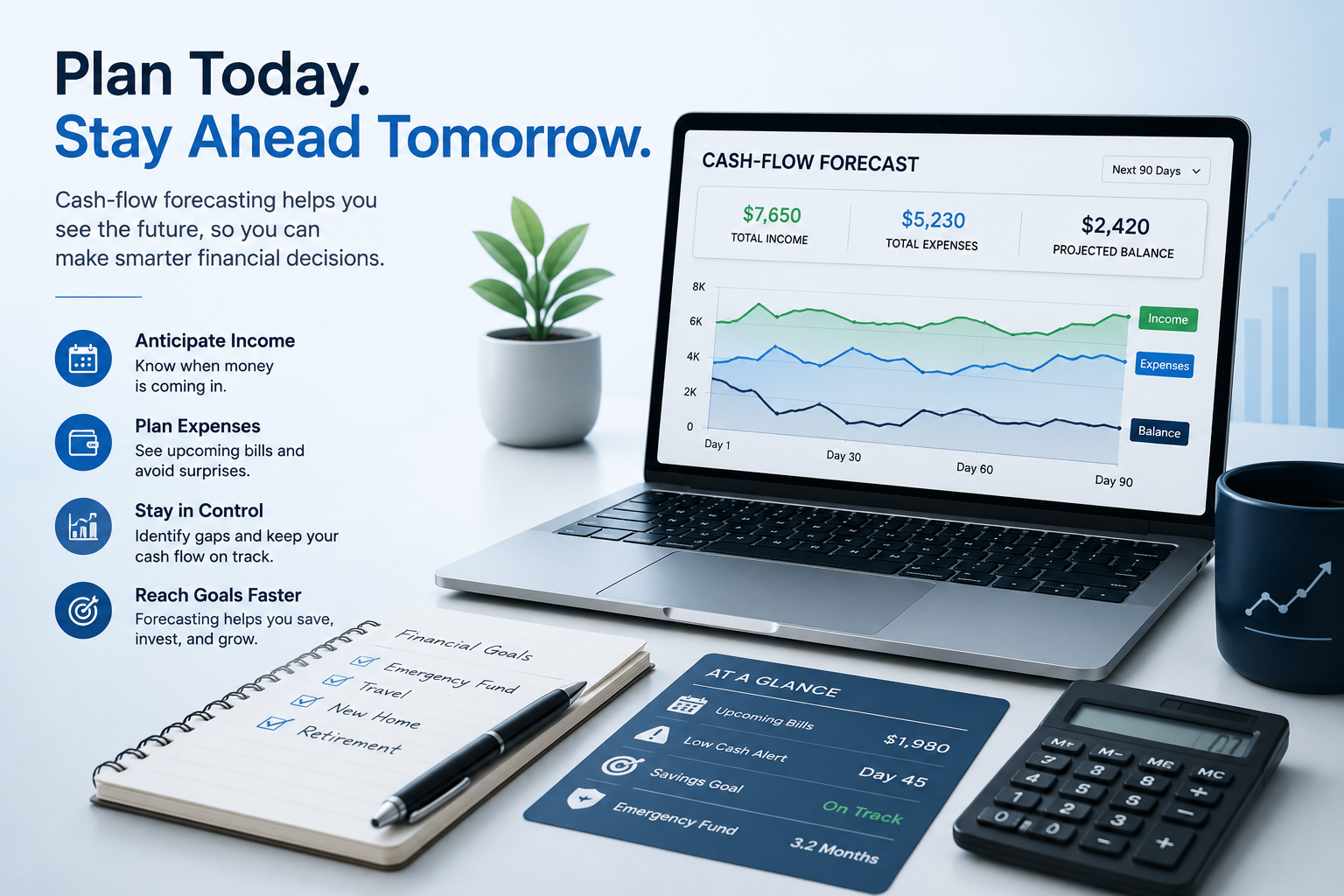
Cash-flow forecasting is the practice of estimating future income and expenses over a specific period. Rather than focusing on historical transactions, forecasting helps individuals understand:
- Expected income
- Upcoming bills
- Planned purchases
- Debt obligations
- Savings contributions
- Potential cash shortages
The goal is to create a clearer picture of future financial conditions before they occur. A simple cash-flow forecast may cover the next 30 days, while more advanced plans can extend 90 days or even a full year.
Why Traditional Budgeting Is No Longer Enough
Traditional budgets are useful for understanding spending habits, but they often have limitations. Many budgets answer questions such as:
| Budgeting Focus | Purpose |
|---|---|
| Monthly spending | Track expenses |
| Category analysis | Identify trends |
| Expense reduction | Control costs |
| Spending history | Review past activity |
Cash-flow forecasting focuses on different questions:
| Forecasting Focus | Purpose |
|---|---|
| Future balances | Predict liquidity |
| Upcoming obligations | Prevent shortages |
| Income timing | Manage cash availability |
| Financial planning | Improve decision-making |
As a result, many consumers are combining budgeting with forecasting rather than relying on budgets alone.
The Shift Toward Proactive Financial Management
One of the biggest reasons cash-flow forecasting is gaining popularity is its proactive nature. Traditional money management often becomes reactive.
People notice problems after:
- Missing a payment
- Overspending
- Facing an unexpected bill
- Experiencing a temporary cash shortage
Forecasting allows individuals to identify potential issues before they happen.
For example, a forecast may reveal:
- A large insurance payment due next month
- Multiple subscriptions renewing simultaneously
- Seasonal expenses approaching
- Lower-than-normal income periods
This visibility provides more time to adjust spending and avoid financial stress.
Freelancers and Self-Employed Workers Are Driving the Trend
The rise of flexible work arrangements has increased interest in forecasting tools.
Unlike salaried employees, freelancers often experience:
- Irregular income
- Seasonal demand fluctuations
- Variable client payments
- Delayed invoices
For these individuals, understanding future cash flow is essential.
Forecasting helps them answer questions such as:
- Will income cover upcoming expenses?
- How much can be allocated to savings?
- When should major purchases be delayed?
- Is there enough cash available during slower periods?
As freelance and contract work continues to grow, forecasting is becoming a standard financial practice.
Technology Is Making Forecasting Easier
Historically, cash-flow forecasting required spreadsheets and manual calculations. Today, digital financial tools have simplified the process.
Modern platforms can help users:
- Estimate recurring expenses
- Track future obligations
- Visualize projected balances
- Monitor financial goals
- Identify potential cash gaps
Many consumers now review future cash positions as regularly as they check current account balances. This change reflects growing demand for forward-looking financial information.
The Connection Between Forecasting and Financial Confidence
Financial confidence is often linked to predictability.
People tend to feel more secure when they understand:
- What income is expected
- What expenses are approaching
- How much money will remain available
Cash-flow forecasting improves visibility across all three areas. This reduces uncertainty and allows individuals to make more informed decisions.
Common benefits include:
- Reduced financial anxiety
- Better savings planning
- Improved spending discipline
- Increased preparedness
- Stronger financial awareness
As a result, forecasting is becoming a practical tool for building long-term financial confidence.
Forecasting Supports Better Saving Habits
Many people struggle with saving because they view savings as whatever remains after expenses. Cash-flow forecasting encourages a different mindset.
By projecting future income and obligations, individuals can:
- Set realistic savings targets
- Schedule transfers in advance
- Avoid unnecessary withdrawals
- Allocate surplus funds more effectively
This approach transforms saving from a reactive behavior into a planned financial activity.
Households Are Beginning to Think Like Businesses
Businesses have relied on cash-flow forecasting for decades.
They use forecasts to:
- Manage liquidity
- Prepare for expenses
- Plan investments
- Reduce risk
Increasingly, households are adopting similar principles. Modern consumers are treating personal finances with greater structure and planning. This shift reflects growing financial literacy and greater awareness of how cash management affects long-term stability.
What the Future May Look Like
As financial habits continue evolving, cash-flow forecasting is likely to become more mainstream.
Future developments may include:
- Longer forecasting horizons
- Goal-based cash projections
- Personalized forecasting models
- Scenario planning tools
- Real-time forecast adjustments
- Enhanced financial planning dashboards
Rather than replacing budgeting, forecasting will likely become an additional layer of financial management. Together, these tools can provide a more complete picture of personal finances.
Final Thoughts
Cash-flow forecasting is emerging as one of the most practical personal finance habits of 2026. While traditional budgeting focuses on past spending, forecasting helps individuals prepare for what lies ahead.
By predicting future income, expenses, and account balances, consumers can make smarter decisions, avoid financial surprises, and build greater confidence in their financial future. As personal finance continues to evolve, the ability to anticipate financial conditions may become just as important as understanding current ones.
