
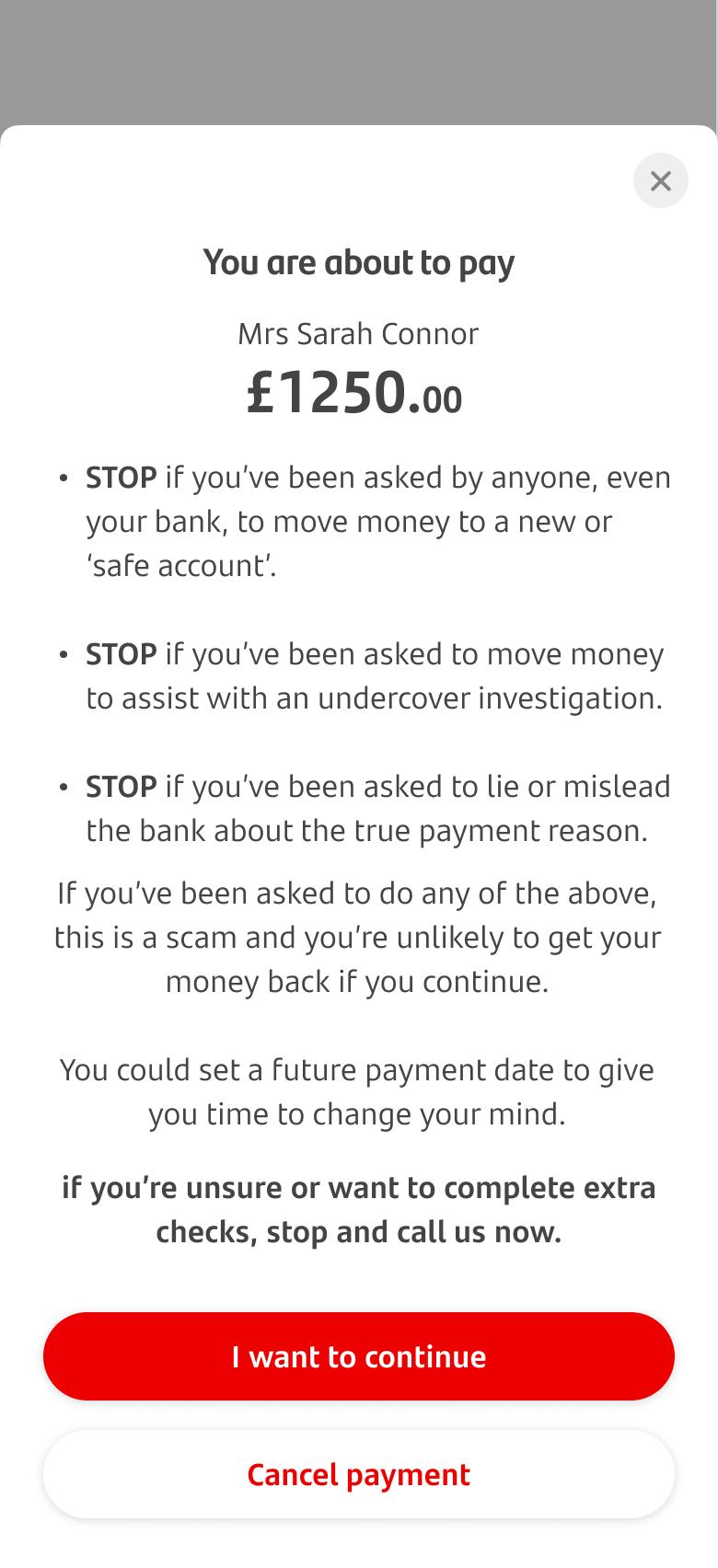
A banking app can confirm a transfer in seconds. That speed is convenient when the recipient is a friend, landlord or business you already know. It becomes much more complicated when the person asking for money is actually a scammer.
By the time a customer notices something is wrong, the payment may already have left the account. That is why fraud prevention is increasingly moving toward an earlier moment in the payment journey: before the customer presses the final confirmation button.
A recent development from Visa illustrates the direction. In September 2026, the company announced an enhanced version of A2A Protect that provides banks with real-time risk information for account-to-account payments. Its purpose is to help financial institutions identify suspicious transfers before money leaves the sender’s account. For customers, technology like this could eventually become visible as something much simpler: a better warning at exactly the right moment.
Transfer Fraud Creates a Different Problem
Not every fraudulent payment begins with someone breaking into a bank account. In many scams, the real customer signs in successfully and authorizes the transfer personally. A criminal might impersonate a bank employee, seller, family member or legitimate business. The victim is persuaded that the payment is necessary and then completes the transfer using the same banking app they normally trust.
From a technical perspective, that creates a difficult situation. The device may be legitimate. The password or passkey may be correct. The customer may have passed every authentication check. Yet the payment can still be fraudulent. That means authentication alone cannot solve the problem.
The Important Moment Is Before the Money Moves
Traditional fraud detection can sometimes feel reactive from the customer’s perspective. A transaction happens and the bank then investigates unusual activity. That model is useful for many types of card fraud, but authorized bank-transfer scams create a stronger reason to evaluate risk before payment completion.
The ideal sequence looks different:
- The customer creates a transfer.
- The bank analyzes the transaction.
- Risk signals are evaluated in real time.
- The app determines whether additional friction is justified.
- The customer sees a relevant warning if necessary.
- The transfer is confirmed or reconsidered.
The objective is not to make every transfer slower. It is to identify the relatively small number of payments where another few seconds of attention could matter.
A Warning Needs to Explain Something Useful
A generic message saying “Be careful of scams” has limited value. Customers see security messages constantly. If the same warning appears before every payment, people quickly learn to dismiss it. A more useful warning is contextual.
For example, an app could explain that the recipient is new, that the transfer differs substantially from the customer’s normal activity or that the circumstances resemble a known scam pattern. The exact information a bank can expose will depend on its systems, data and security policies. The principle is more important than the specific wording.
The warning should help answer:
Why is the bank interrupting this particular transfer?
Without that context, additional friction can feel arbitrary.
Real-Time Risk Scores Can Work Behind the Screen
Customers do not need to see the technical risk model itself. Behind the interface, a bank can evaluate multiple signals and combine them into an assessment of how unusual or risky a transfer appears.
Visa’s enhanced A2A Protect, announced in September 2026, introduces what the company describes as a unified fraud score. Visa says the system combines global risk intelligence with AI and transfer-learning techniques to provide financial institutions with immediate risk insights. That does not mean every bank will expose a numerical score to customers. A number such as “Risk: 83/100” might create more confusion than clarity.
The app can translate a complex model into a much simpler customer decision:
This payment looks unusual. Do you still want to continue?
New Recipients Are an Obvious Point for Extra Attention
Sending $40 to someone you have paid every month for three years is different from sending $4,000 to an account added five minutes ago. Banking apps already know whether a recipient is new. That makes the first transfer to a new payee a natural place to consider additional checks.
The app could slow the process slightly, display the recipient information more prominently or ask the customer to reconsider why the payment is being made. The objective should not be to make new recipients difficult to use. Most new payees are legitimate. Instead, the interface can acknowledge that unfamiliar recipients create more uncertainty than established payment relationships.
Unusual Amounts Can Add Context
Transaction size can provide another signal. Imagine a customer whose typical transfers are below $300 suddenly attempting to send $8,000 to a newly added recipient. The amount alone does not prove fraud. People make unusually large legitimate payments for vehicles, property deposits, renovations, education and countless other reasons.
But unusual size combined with other signals can justify additional attention. This is where risk assessment becomes more useful than a simple rule. Instead of saying “every transfer over $5,000 is dangerous,” a system can consider whether a payment is unusual in the context of that particular account.
Good Fraud Prevention Should Not Warn About Everything
The biggest UX problem with warnings is fatigue. If customers encounter a serious-looking alert every time they send money, the alert eventually stops feeling serious.
Consider the difference:
| Payment situation | Possible experience |
|---|---|
| Familiar recipient and normal amount | Normal confirmation |
| New recipient | Additional recipient review |
| Unusually large transfer | Contextual warning |
| Several unusual signals together | Stronger intervention |
| Very high-risk pattern | Additional verification or temporary hold |
This type of graduated response is more useful than applying identical friction to every payment. Low-risk transactions remain fast, while suspicious situations receive more attention.
False Positives Matter
Fraud systems face an uncomfortable trade-off. A model that is too relaxed can miss scams. A model that is too aggressive can interrupt legitimate payments. Both outcomes have consequences. A customer trying to pay a contractor, move savings or send emergency money to a relative may become frustrated if a legitimate transaction is repeatedly blocked.
This is why Visa’s announcement is notable for another reason. The company says the enhanced A2A Protect has reduced unnecessary fraud alerts while increasing fraud detection in its testing and deployments. The broader goal is not simply to produce more warnings. It is to produce better-targeted warnings.
The App Should Give the Customer a Way to Reconsider
A fraud warning is most useful when it creates a meaningful pause. Suppose someone claiming to be from a bank has instructed a customer to move money into a “safe account.” A warning appearing before confirmation could ask whether another person instructed them to make the payment. That question changes the customer’s attention.
Until that point, they may have been concentrating on completing the steps given by the scammer. The banking app introduces a competing piece of information at the exact moment money is about to leave. The customer can stop, leave the transfer screen and independently contact the organization involved. A few seconds of friction can be valuable when they interrupt social engineering.
Warning Design Matters as Much as Detection
Even an excellent fraud model can be undermined by poor interface design. Important information needs to be noticeable without becoming confusing.
A strong warning might contain three elements:
- what the app noticed;
- why that could matter;
- what the customer can safely do next.
Long paragraphs of legal language are unlikely to help someone who believes they need to send money urgently. Clear language matters more. “Scammers may tell you to move money to protect your account” communicates a recognizable situation much faster than a generic security disclaimer.
Banks Also Need to Avoid Revealing Too Much
Transparency has limits in fraud prevention. If every internal signal used by a bank were displayed publicly, criminals could potentially learn how to structure transactions to avoid detection. The interface therefore needs to explain enough to help the customer without exposing the complete fraud model.
This creates an interesting design challenge. Customers need a reason to take a warning seriously, while the bank needs to protect the systems producing that warning. The best customer explanation may therefore describe the situation rather than the underlying algorithm.
AI Can Help Find Patterns, but It Cannot Know Every Situation
Machine learning can identify patterns across large volumes of transactions that would be difficult to evaluate manually. That makes it useful for real-time payment risk. However, unusual does not automatically mean fraudulent, and normal-looking does not automatically mean safe. A scammer may deliberately ask for an amount that appears ordinary. A legitimate customer may make a highly unusual payment.
Risk models therefore work best as one layer in a broader decision process rather than as an infallible judge. For customers, that distinction is important. A warning means “look again,” not necessarily “this recipient is definitely a criminal.”
Banking Apps Could Become More Active at the Point of Payment
Most banking interfaces began primarily as tools for viewing balances and moving money. They are gradually becoming more active. Apps can explain failed payments, track international transfers, expose card controls and provide context around transactions. Pre-transfer fraud warnings extend that idea further.
Instead of merely executing the customer’s instruction, the app can recognize when the instruction deserves another look. That does not mean the bank should question every financial decision a customer makes. The challenge is to intervene selectively, when the risk is high enough that a warning provides more value than friction.
The Best Warning May Be the One You Rarely See
A successful fraud-warning system should probably remain invisible during most everyday banking. Regular payments to familiar people should continue to feel simple. Routine transfers should not become a sequence of security pop-ups. The warning becomes valuable precisely because it is unusual. When it does appear, the customer has a reason to pay attention.
The September 2026 expansion of real-time A2A fraud tools shows how financial institutions are gaining more information at the moment before a transfer is completed. The technical systems behind those decisions may involve large datasets, AI models and risk scores, but the customer-facing result can be remarkably simple.
Before the money leaves the account, the banking app gets one final opportunity to ask:
Are you sure this payment is going where you think it is?
