
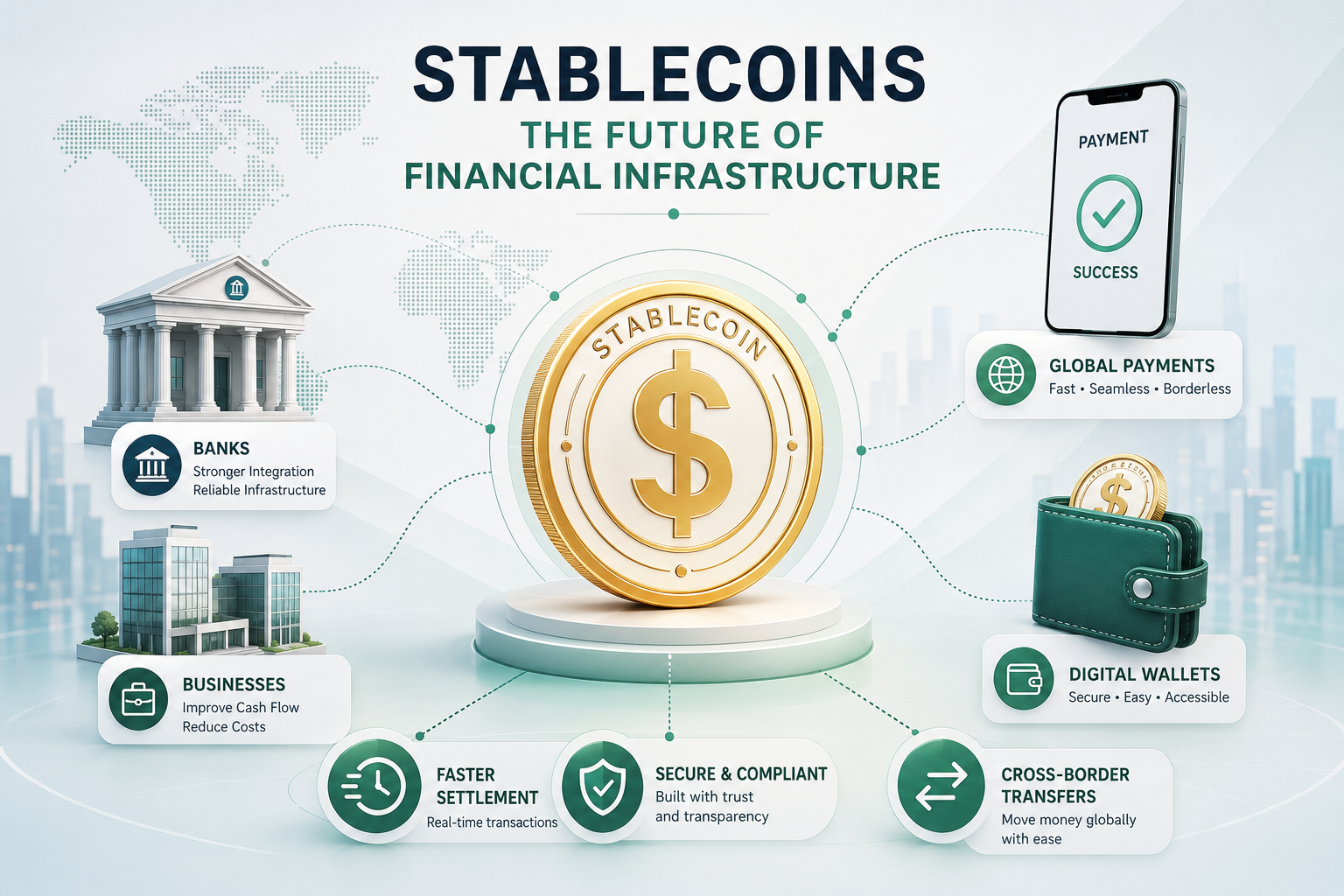
For years, stablecoins were mostly associated with cryptocurrency traders and digital asset enthusiasts. In 2026, that perception is changing rapidly. Financial institutions, payment companies, and enterprise software providers are increasingly exploring stablecoins as a practical tool for moving money faster and more efficiently.
The biggest shift is that stablecoins are no longer being discussed as speculative assets. Instead, they are becoming part of the financial infrastructure that powers payments, treasury operations, and international transfers. Major banks, payment providers, and fintech companies are investing heavily in systems that can support stablecoin transactions alongside traditional payment networks.
Faster Global Payments
Cross-border payments have traditionally been slow, expensive, and dependent on multiple intermediaries. Stablecoin-based settlement offers a different approach by allowing transactions to move almost instantly regardless of location.
Businesses that operate internationally are paying close attention to this development because faster settlement can improve cash flow and reduce operational costs. Fintech companies focused on international payments are already building services around this concept.
The Infrastructure Race
What makes 2026 different is that the focus has shifted from digital currencies themselves to the infrastructure behind them. Companies are investing in compliance systems, payment gateways, digital wallets, and settlement networks that can support large-scale adoption.
Industry analysts increasingly describe stablecoins as financial “plumbing” rather than standalone products. The long-term opportunity lies in building reliable systems that connect traditional finance with digital settlement technology.
Banks Are Paying Attention
Traditional banks are no longer ignoring blockchain-based payment systems. Several major banking groups are working on tokenized deposit networks and digital settlement frameworks designed for institutional use. These initiatives aim to provide many of the benefits associated with stablecoins while remaining integrated with existing banking structures.
This growing involvement from established financial institutions signals that digital payment innovation is moving beyond startups and becoming part of the broader financial ecosystem.
What Comes Next?
The next stage of fintech innovation may not be defined by new consumer apps but by the invisible infrastructure that powers money movement behind the scenes. As regulation becomes clearer and adoption grows, stablecoin-enabled systems could become a normal component of global finance.
The companies that successfully combine speed, security, and compliance will likely play a major role in shaping how payments operate over the next decade.
