
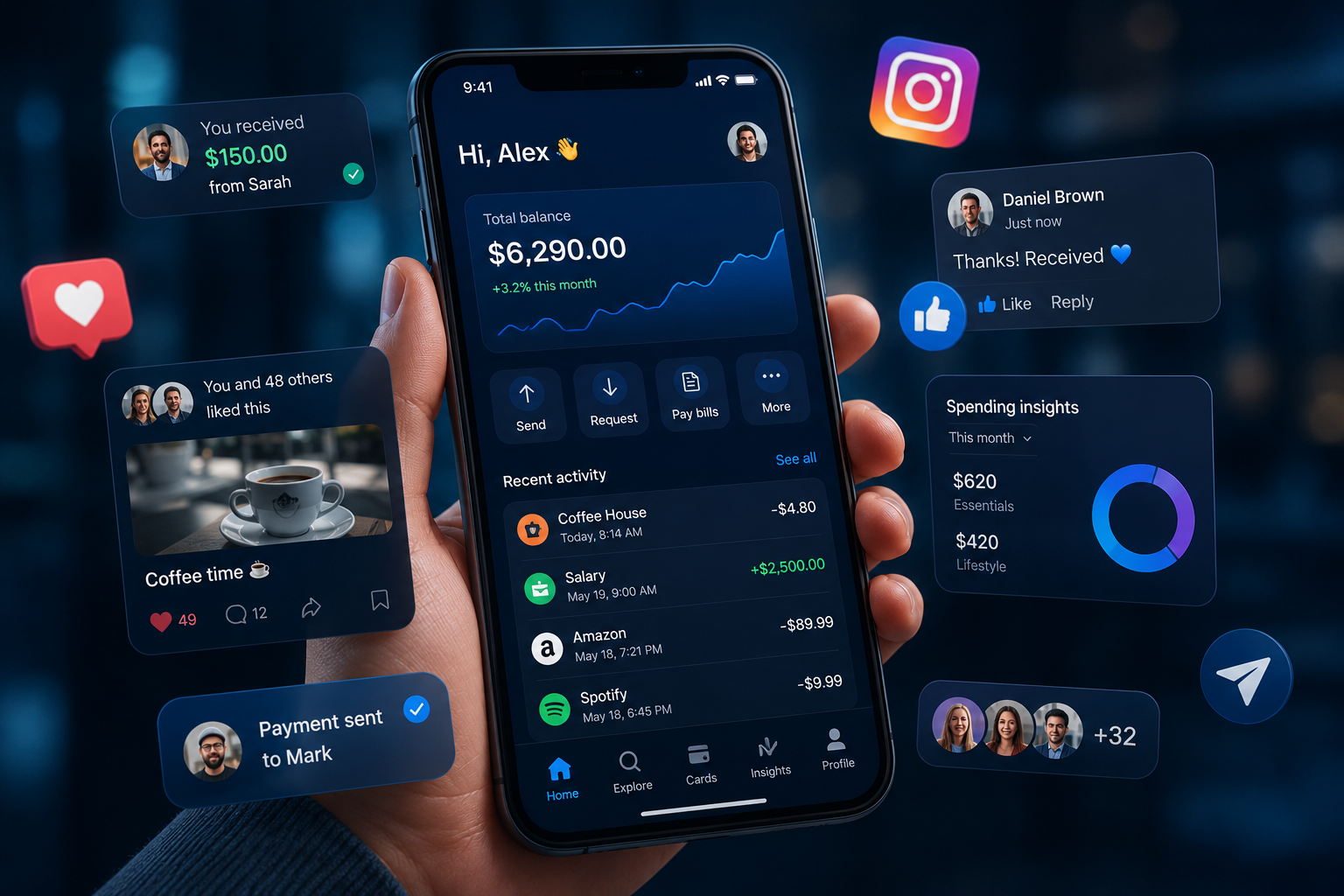
Most consumers no longer compare banking apps to other banks. They compare them to the digital platforms they use every day.
When people open a finance app in 2026, they expect the same speed, simplicity, personalization, and responsiveness they already experience on social media, streaming platforms, and mobile marketplaces.
This shift is quietly changing the way financial companies build products, design interfaces, and compete for user attention.
Digital Habits Changed Consumer Expectations
Over the last decade, smartphones reshaped how people interact with technology. Social apps trained users to expect instant feedback, clean interfaces, fast navigation, and highly personalized experiences.
As a result, consumers became less tolerant of slow-loading dashboards, outdated menus, complicated banking flows, and unnecessary friction.
For many younger users especially, traditional banking design now feels disconnected from modern digital behavior.
People Want Banking To Feel Effortless
The most successful digital products reduce complexity instead of adding more features. Social apps became dominant partly because users never needed instructions to understand them.
Financial apps are now moving in the same direction.
Users increasingly expect to:
- send money instantly
- track spending visually
- receive real-time notifications
- navigate without confusion
- access everything within a few taps
Convenience has become one of the strongest competitive advantages in modern finance.
Banking Apps Are Becoming Daily-Use Platforms
Traditional banking once revolved around occasional interactions like transfers, deposits, or loan applications. Today, financial apps are becoming part of everyday digital routines.
People check balances the same way they check messages. Spending alerts appear like social notifications. Budget tracking increasingly uses visual systems similar to fitness or productivity apps.
The line between financial tools and lifestyle apps continues becoming thinner.
Design Now Influences Trust
Consumers often associate clean digital experiences with reliability and professionalism. A confusing or outdated interface can reduce confidence even if the financial service itself is technically strong.
This is one reason fintech companies continue outperforming older institutions in user experience perception. Many traditional banking systems were built around infrastructure first and user experience second.
Modern financial platforms are reversing that logic.
| Older Banking UX | Modern Banking UX |
|---|---|
| Complex navigation | Minimal and intuitive design |
| Slow account actions | Instant interactions |
| Static dashboards | Dynamic personalized insights |
| Formal user flows | Mobile-first simplicity |
Personalization Is Becoming Standard
Social platforms changed expectations around personalization. Users now assume digital products should adapt to their behavior automatically.
Banking apps increasingly use spending patterns, financial habits, and transaction history to create more customized experiences.
Instead of generic dashboards, users now see targeted insights, smart alerts, savings suggestions, and spending summaries tailored specifically to their activity.
Financial Platforms Are Competing Like Tech Companies
The biggest shift happening in finance may not be technological. It may be cultural.
Financial companies are no longer competing only on rates, products, or branch locations. They are increasingly competing on interface quality, responsiveness, and user engagement — areas traditionally dominated by technology companies.
In many cases, user experience now influences loyalty as much as financial products themselves.
Conclusion
Consumers expect banking to work like social apps because digital behavior has fundamentally changed what people consider normal technology experiences.
Fast interactions, personalization, intuitive design, and mobile-first simplicity are no longer optional features in finance. They are quickly becoming the baseline expectation for modern users.
