
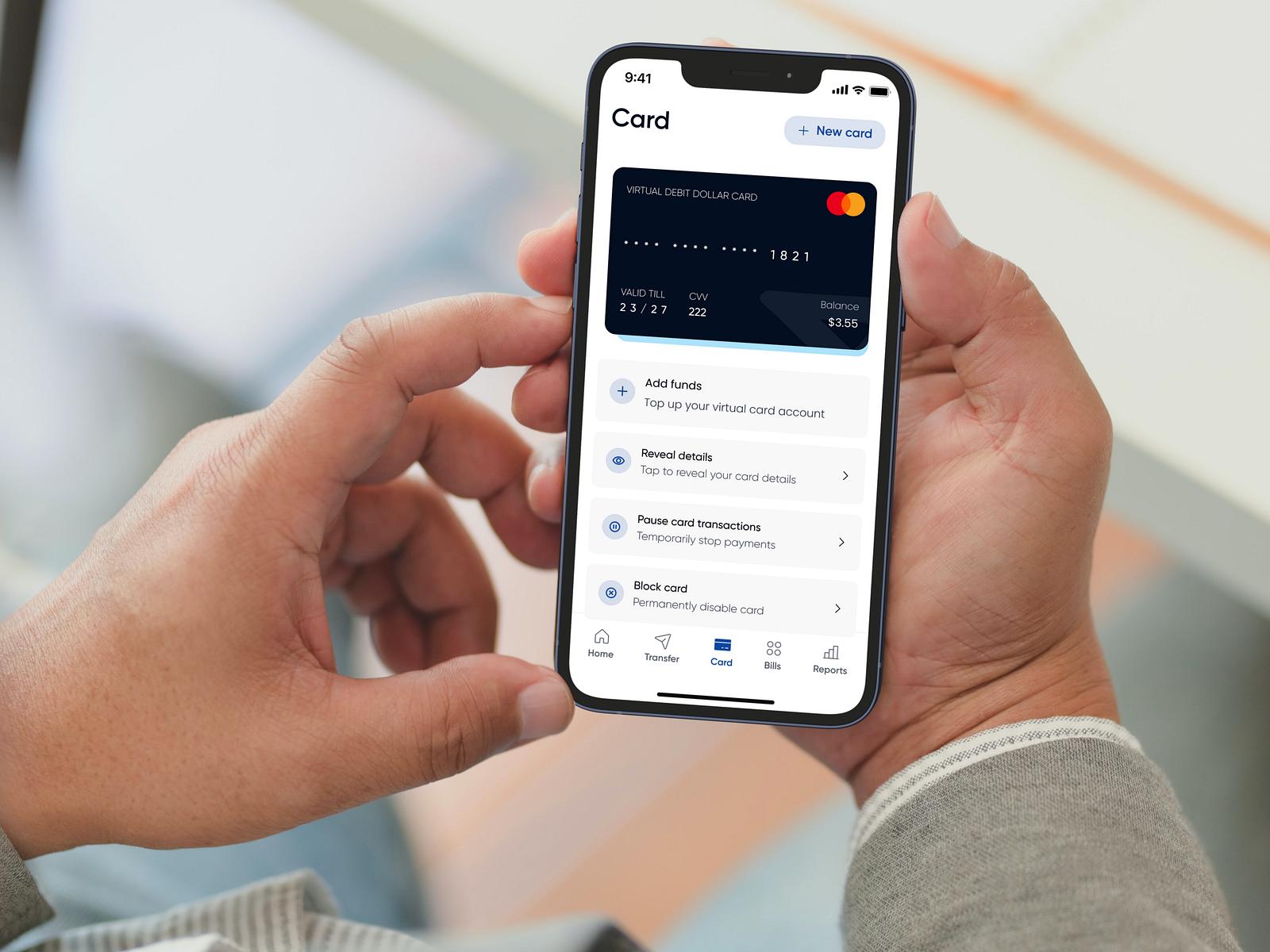
For decades, paying by card followed a simple model. A customer received one card number and used essentially the same credential across supermarkets, travel websites, subscription services and unfamiliar online stores. Digital banking is beginning to challenge that model by separating the physical card from the number shared during an individual transaction.
Virtual card numbers allow a bank or payment provider to create an additional payment credential linked to an existing account or card. Depending on the system, that number may remain active for repeated purchases, be assigned to a specific merchant or disappear after a limited period. The underlying account stays the same, but the credential exposed during payment can change.
What once looked like a specialist fintech feature is becoming increasingly relevant to ordinary banking because so much everyday spending now happens remotely. As customers manage more merchants, subscriptions and digital services, using one permanent card number everywhere becomes less attractive.
One Bank Account No Longer Needs One Card Number
The physical card used to be the central object in card payments. Its number identified the payment credential, and customers typically reused it until the card expired or the bank replaced it. Mobile banking makes that relationship much more flexible. A customer can have one underlying account while using several virtual credentials for different purposes. The bank still knows which account should fund the transaction, but merchants do not necessarily need access to the primary card number.
A simplified structure can look like this:
| Payment Method | Credential Used | Typical Purpose |
|---|---|---|
| Physical card | Primary card number | In-person payments |
| Standard virtual card | Separate digital number | General online spending |
| Merchant-specific number | Unique number for one merchant | Recurring purchases |
| Temporary number | Short-lived credential | One-time or unfamiliar purchase |
| Mobile wallet token | Tokenized credential | Contactless and app payments |
The important change is architectural. The payment credential becomes something that can be created and managed independently instead of being permanently tied to a piece of plastic.
Online Shopping Has Changed the Risk Model
A permanent card number made sense when most card purchases took place at physical terminals. Today, consumers may enter or store card details across dozens of websites and apps. Every additional merchant holding a reusable payment credential creates another place where that credential exists outside the customer’s direct control. That does not mean every merchant is unsafe, but it increases the number of relationships that depend on the same sensitive information.
Virtual card numbers reduce that concentration. If different merchants receive different credentials, a problem involving one number does not necessarily require replacing the credential used everywhere else. The practical advantage becomes especially obvious for people who frequently shop online. Instead of thinking of a card number as a permanent identity, users can treat payment credentials as disposable or purpose-specific tools.
Merchant-Specific Numbers Could Simplify Payment Management
One of the most interesting models gives individual merchants their own virtual number. A streaming service, online retailer and travel platform could each receive a different credential, even though every payment ultimately reaches the same underlying bank account.
This creates a cleaner relationship between merchants and payment credentials. If a customer no longer wants one company to charge the card, the associated virtual number can potentially be disabled without affecting unrelated services.
That is a very different experience from replacing an entire card after one credential becomes problematic. Under the traditional model, changing the main number can create a chain of follow-up tasks as customers update subscriptions, delivery apps and other saved payment methods. Merchant-level credentials can isolate those relationships.
Temporary Numbers Have a Different Role
Not every virtual card needs to remain active indefinitely. Some systems can create credentials intended for a single purchase or a limited period. That can be useful when purchasing from a merchant a customer does not expect to use again. Instead of giving the business a reusable primary credential, the customer completes the transaction with a number that has a narrower purpose. The concept is similar to creating a temporary access key rather than distributing the master key.
However, temporary credentials are not ideal for every transaction. Certain merchants may need the original payment method later for refunds, deposits or verification. Hotels, car rental companies and some recurring services can have payment flows that extend beyond the initial checkout. Banks therefore need to make the distinction between temporary and persistent virtual cards clear rather than presenting disposable credentials as universally appropriate.
Virtual Cards Can Make Subscriptions Easier to Separate
Subscriptions are another natural use case. Consumers increasingly pay recurring charges for entertainment, software, cloud storage, fitness services and other digital products. If every subscription uses the same main card, they become financially connected through one credential even though the services themselves are unrelated. A replacement card can therefore affect many recurring payments at once.
Assigning different virtual credentials creates another layer of organization. A user could potentially identify which credential belongs to which service and disable one without disturbing the others. This does not replace good subscription management. Users still need to understand cancellation terms and contractual obligations. But it can provide a more precise way to control the payment credential attached to each relationship.
The Difference Between Card Controls and Virtual Credentials
Virtual card numbers can appear similar to modern card controls, but they solve different problems. Granular card controls modify what an existing credential is allowed to do. A user might freeze a card, disable online purchases or set transaction restrictions.
Virtualization changes the credential itself.
| Card Controls | Virtual Card Numbers |
|---|---|
| Modify permissions | Create separate credentials |
| Often affect one existing card | Can isolate individual merchants |
| Useful after suspicious activity | Can reduce credential exposure beforehand |
| Control where a card works | Control which number is shared |
| Usually preserve the card number | Can replace or rotate the visible number |
The two systems can work together. A bank could issue multiple virtual cards and allow the user to freeze or restrict each one independently. That combination provides far more precision than the traditional choice between keeping an entire card active or cancelling it.
Refunds Make Virtual Payments More Complicated
The technology also creates operational questions that good banking apps must handle carefully. Suppose a customer makes a purchase using a temporary virtual number and requests a refund several weeks later. The merchant may attempt to return the money to the original credential even though the visible virtual number is no longer available for new purchases.
The bank needs a reliable mapping between the retired credential and the underlying account so the refund still reaches the customer. This illustrates an important point: disposable from the customer’s perspective does not necessarily mean erased from the payment infrastructure. Banks may still need to recognize historical credentials for settlement, refunds and disputes even after those numbers can no longer authorize new transactions.
Virtual Cards Need Better Interfaces
Generating more credentials can create its own form of complexity. A customer with twelve virtual cards needs to know which one belongs to a particular merchant and whether it is still active. Simply placing a long list of numbers inside a banking app would defeat much of the convenience.
Better interfaces can organize virtual credentials around their purpose rather than their raw card details. A user might see labels such as:
- Amazon purchases;
- streaming subscription;
- work software;
- travel bookings;
- temporary online shopping;
- monthly utilities.
Transaction history can also be attached directly to each virtual credential. This allows the customer to understand not only which account funded a payment, but which payment identity was used.
Virtual Credentials Can Improve Fraud Response
A compromised primary card number can create widespread disruption because the same credential may be stored with many legitimate merchants. Banks often need to replace the card and customers then spend time updating payment details elsewhere. Credential isolation can reduce that blast radius.
If suspicious activity is associated with one virtual number, the bank may be able to retire that credential while leaving the physical card and other virtual numbers untouched. Customers retain access to most of their normal payment relationships while the affected credential is replaced. This can make fraud response more targeted rather than treating every credential problem as a reason to rebuild the customer’s entire card setup.
Businesses May Benefit Too
The idea becomes even more useful for small businesses. Companies often need cards for advertising platforms, software subscriptions, travel, contractors and purchasing. Giving every service access to the same company card creates both administrative and security problems. Individual virtual cards can separate expenses by vendor, employee or project.
For example, a company could create different credentials for:
- cloud infrastructure;
- digital advertising;
- office software;
- employee travel;
- recurring supplier payments.
Limits and controls could then be applied individually. If one subscription is cancelled, its credential can be retired without changing the company’s other payment arrangements. This turns a bank card from one broad spending tool into a collection of smaller payment permissions.
The Physical Card Is Becoming Only One Interface
Virtual cards illustrate a larger change in digital banking. The account remains important, but the physical card is no longer the only way customers interact with the payment network. Mobile wallets already hide the original card credential behind tokenization in many transactions. Virtual numbers extend a similar principle to online commerce by allowing the visible credential to become more flexible.
The future card experience may therefore look less like one account paired with one permanent number and more like one source of funds connected to multiple payment identities. Customers may use one credential in a mobile wallet, another for subscriptions, another for online shopping and a physical card for situations where plastic remains convenient.
More Credentials Can Mean More Control
Virtual card numbers are useful because they reverse an old assumption in banking: simplicity does not always mean having only one payment credential. When the same number is used everywhere, account management looks simple until something goes wrong. A compromised credential, forgotten subscription or merchant dispute can suddenly affect many unrelated payment relationships.
Creating separate virtual credentials introduces more objects into the banking interface, but each one can have a narrower and clearer purpose. That is why virtual cards are moving beyond being an unusual feature for highly technical users. As digital payments become more fragmented across merchants, devices and subscriptions, consumers need payment controls that reflect that reality. The bank account may remain unified underneath. The numbers used to access it no longer have to be.
