
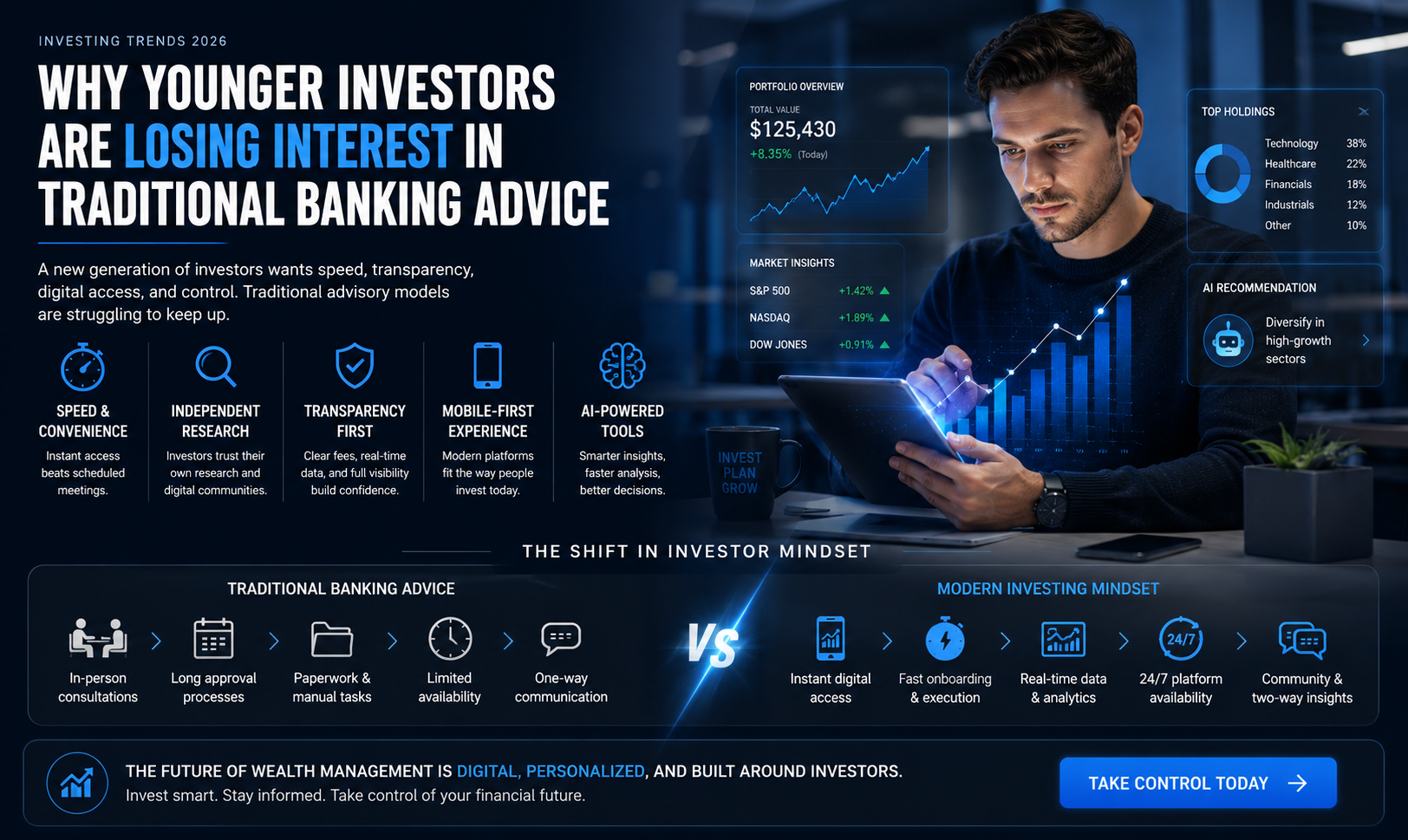
The relationship between banks and younger investors is changing rapidly.
For decades, traditional financial advisory systems depended heavily on in-person consultations, long-term banking relationships, and institutional trust. But modern investors increasingly approach money very differently.
In 2026, many younger users prefer speed, flexibility, transparency, and independent research over traditional financial meetings.
And that shift is forcing wealth management firms to rethink how financial guidance works entirely.
Digital Confidence Changed Investor Behavior
Younger investors grew up solving problems online.
They compare products instantly, research financial strategies independently, and follow market discussions through digital communities rather than relying only on institutional advisors.
Because of that, many users no longer automatically view banks as the primary source of financial education.
Instead, they increasingly combine:
- investment apps
- financial creators
- AI-powered analysis tools
- market newsletters
- digital portfolio platforms
This creates a far more decentralized investing environment.
Traditional Banking Feels Too Slow for Many Users
One major criticism younger investors often have about traditional advisory systems is speed.
Booking consultations, waiting for callbacks, handling paperwork, and navigating formal processes feels outdated to users already accustomed to instant digital services.
| Traditional Financial Advisory | Modern Digital Investing |
|---|---|
| Scheduled meetings | Instant app access |
| Institution-driven guidance | Self-directed research |
| Long onboarding processes | Fast account setup |
| Formal communication | Real-time updates |
| Limited availability | 24/7 platform access |
The difference in user experience is becoming impossible to ignore.
Transparency Became a Major Priority
Younger audiences also expect much more transparency around fees, portfolio performance, and financial products.
Many digital investing platforms now emphasize:
- simple dashboards
- real-time analytics
- clear fee structures
- instant portfolio tracking
- mobile-first usability
Traditional financial institutions often struggle to match that level of simplicity.
Social Media Changed Financial Discovery
Financial education itself now happens differently.
Platforms like YouTube, TikTok, Reddit, and X transformed how younger investors discover information about markets, investing strategies, and wealth building.
Instead of relying exclusively on advisors, users now consume financial content daily through short-form media and online communities.
That constant exposure increases confidence in self-directed decision making.
AI Tools Are Reshaping Financial Guidance
Another major factor is artificial intelligence.
AI-driven financial tools increasingly provide:
- portfolio analysis
- risk insights
- investment summaries
- market monitoring
- automated recommendations
For many younger users, these systems feel faster and more accessible than traditional consultations.
This does not necessarily replace human advisors completely, but it changes how their role is perceived.
Younger Investors Want More Control
Control is becoming one of the defining themes of modern investing behavior.
Many users prefer managing at least part of their portfolios independently rather than delegating every decision to institutions.
That mindset explains the continued growth of self-directed investing platforms across global markets.
Trust in Large Institutions Is Also Changing
Economic uncertainty, inflation pressure, banking disruptions, and rapid fintech growth influenced how younger generations view large financial institutions.
Many investors now diversify not only their portfolios — but also where they receive financial guidance.
Institutional authority alone no longer guarantees loyalty the way it once did.
Financial Advisors Are Adapting
Traditional advisory firms are not disappearing.
However, many are now modernizing aggressively through:
- digital onboarding
- mobile communication
- AI-assisted planning
- simplified reporting
- hybrid advisory models
The industry increasingly understands that modern investors expect convenience alongside expertise.
Why This Shift Will Continue
Younger investors are entering financial markets with completely different expectations than previous generations.
They value speed, flexibility, digital access, and independent research much more heavily than formal institutional structure.
That doesn’t mean professional financial advice disappears.
But it does mean the future of wealth management will likely look far more digital, personalized, and technology-driven than traditional banking models ever expected.
